
IP Infusion vs Juniper MX, PTX, ACX and QFX: a technical comparison.
Platform by platform, silicon by silicon: how IP Infusion routers and switches line up against the MX204, QFX5120, QFX5220, ACX7100 and PTX10001, with a Junos-to-OcNOS CLI map and what published operators said about the move.
The MX204 last order date is 15 June 2027.
OcNOS-SP on the Edgecore AGR130 and the UfiSpace S9510-28DC is IP Infusion's option for the SP edge, PE and aggregation role the Juniper MX204 fills today. Juniper announced end of life for the MX204 on 15 June 2026 in TSB107750 and publishes these milestones:
- 15 June 2026End of life announced (TSB107750)
- 15 June 2027Last order date for MX204 hardware
- 15 June 2028End of hardware failure analysis
- 15 June 2030End of engineering; 27.4 is the last software version
- 30 June 2032End of support
The OcNOS-SP platforms for the MX204 role
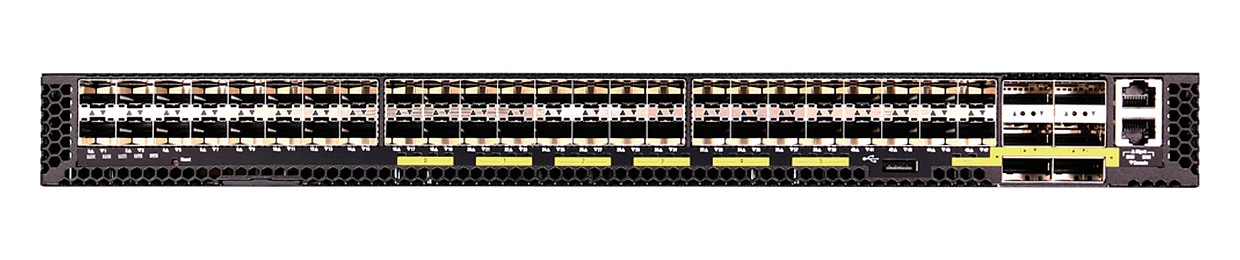
Edgecore AGR130 (AS5916-54XKS)For a 10G-dense edge 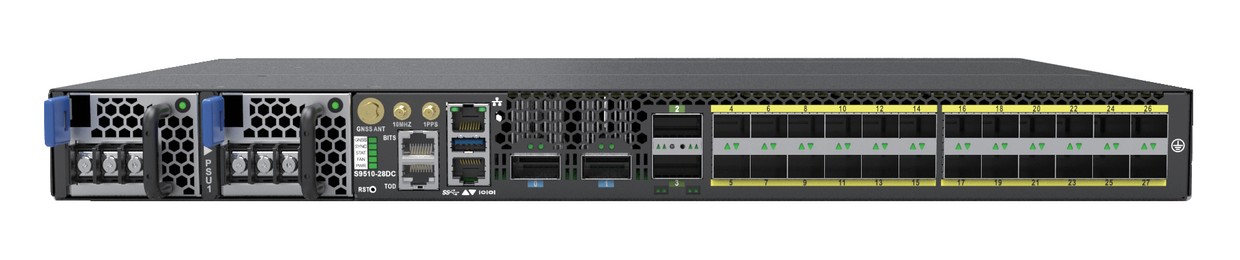
UfiSpace S9510-28DCFor 25G access with 400G uplinks
Three planning steps to start this quarter
- 1. Inventory every MX204 by roleBuild one row per router: site, serial number, software release in production, support contract end date and the role it plays (PE, P, peering, aggregation or lab). The list shows which routers carry critical traffic, which can move first, and which reach a contract renewal before a replacement could be in place.
- 2. Map the features each role depends onList the protocols and services each configuration actually uses and check them in the OcNOS Feature Matrix for the platform and release you plan to run. Route policy needs its own review: each Junos policy statement is rewritten as an OcNOS route map that expresses the same intent, rather than ported line by line.
- 3. Test one site safelyAgree the pass criteria first: convergence time, control-plane load, telemetry and the upgrade procedure. Build the OcNOS-SP router in a lab, or as a shadow peer that learns the same routes under the same policy but carries no customer traffic, and move production traffic only after the criteria are met. The free OcNOS VM runs in GNS3, EVE-NG and KVM, so configuration work can start before hardware arrives.
The MX204 row in the platform mapping below compares both OcNOS-SP platforms on ports and capacity, and a migration assessment confirms scale and features against your configuration before any unit is replaced. Dates are as published by Juniper and were checked in October 2026; Juniper's page is the authoritative source.
Same four layers. Different suppliers.
Both are commercial and carrier-grade, both run the same standards, and both come with SLAs and a global support organization. A router is four layers either way. What differs is who supplies each layer, and whether you can change one of them without changing the rest.
Different suppliers per layer, qualified together by IP Infusion and delivered as one product on one support contract and one RMA path.
One supplier for every layer, delivered and renewed under one contract.
| Dimension | IP Infusion (OcNOS) | Juniper (Junos) |
|---|---|---|
| What you buy | The finished router or switch: open hardware, OcNOS, optics and support as one system. Or OcNOS on its own, for hardware you already run. | The finished router or switch: Juniper hardware, Junos and support from one vendor. |
| Hardware | Open platforms from Edgecore, UfiSpace and Celestica. One OcNOS operating model across all of them. | Juniper-branded systems: MX, QFX, ACX, PTX. |
| Silicon | Broadcom merchant: Qumran and Jericho for routing, Trident and Tomahawk for switching. | Juniper Trio (MX) and Express (PTX), plus Broadcom merchant silicon in the QFX5000 (Trident, Tomahawk) and ACX7000 (Jericho2) lines. |
| Operating system | OcNOS-SP for service-provider routing, OcNOS-DC for the data center. | Junos OS and Junos OS Evolved across the MX, QFX, ACX and PTX lines. |
| Licensing | Licensed separately from the hardware. Perpetual and term, with feature tiers unlocked by software upgrade. | Juniper Flex software licensing, with subscription and term tiers. |
| Sourcing | Hardware and software are bought separately, so platforms can be competed across ODMs. | Hardware, software and support are sourced from Juniper. |
| Protocols | BGP, OSPF, IS-IS, MPLS, SR-MPLS, SRv6, EVPN-VXLAN, EVPN-MPLS, RSVP-TE, IEEE 1588v2. Per-platform detail in the Feature Matrix. | Comparable standards-based suite across Junos. |
| Optics | Multi-vendor pluggables with proven interoperability, including 400G ZR and ZR+ coherent. | Juniper optics. |
| Management | Industry-standard transactional CLI with explicit commit. NETCONF, OpenConfig, gNMI/gRPC, YANG, RESTCONF, Ansible, IP Maestro EMS. | Junos CLI with a commit model. JTI and OpenConfig telemetry, Apstra and Mist. |
| Support | One support contract and one RMA path from IP Infusion, across software and hardware. | Single-vendor JTAC for hardware and software. |
Which one fits your network
The protocol sets overlap heavily, so the decision usually comes down to how you want to buy and operate the network.
- Licensing you own. Perpetual and term options, licensed separately from the hardware, so the features you depend on stay a cost you own rather than one you renegotiate at every renewal.
- Hardware you can compete. The same OcNOS image runs on merchant-silicon platforms from Edgecore, UfiSpace and Celestica, so the box can go out to bid without changing the network OS.
- Layers that stay separable. Hardware, software and optics are bought on their own merits, so a change of supplier in one does not force a change in the others.
- Multi-vendor optics. Pluggables with proven interoperability from several suppliers, including 400G ZR and ZR+ coherent for IPoDWDM and DCI.
- Support from one team. One responsive IP Infusion team backs both the software and the hardware, under a single contract and one RMA path, so a problem does not bounce between suppliers.
- A single vendor across hardware, software and support, with one JTAC relationship.
- Operations already standardized on Junos OS or Junos OS Evolved, with Juniper tooling, automation and processes you intend to keep.
- Features that live in the Junos stack specifically, such as advanced BNG and subscriber management on MX, or Junos-proprietary behavior your design depends on.
Five Juniper anchor platforms, mapped by capacity and role.
Each row pairs a Juniper anchor platform with its IP Infusion equivalent, the one-way capacity comparison, the fit verdict and the key caveat. Where one IP Infusion platform does not carry the capacity, the row says so and names the combination that does.
| Juniper platform | IP Infusion equivalent | Ports | Capacity | Match | Notes |
|---|---|---|---|---|---|
| Juniper MX204SP edge / aggregation / DCI · Junos Trio | AGR130 / S9510-28DCOcNOS-SP | 8×10G + 4×100G → 48×10G + 6×100G | 400G → 800G | Capacity headroom | Confirm in the assessment: Trio BNG subscriber scale and DCI throughput against your port mix. |
| Juniper QFX5120-48YDC leaf / EVPN-VXLAN ToR · Junos OS | AS7326-56X / S8901-54XCOcNOS-DC | 48×25G + 8×100G → 48×25G + 8×100G | 2.0T → 2.0T (one way) | Port-for-port match | SKU selection depends on copper-versus-fiber ports and uplink mix, mapped against the HCL in the assessment. |
| Juniper QFX5220-32CDDC spine / 400G · Junos OS Evolved | Edgecore AS9716-32DOcNOS-DC | 32×400G → 32×400G | 12.8T → 12.8T | Port-for-port match | For AI fabric, both sides sit below the tier we would recommend: Tomahawk 4 or higher is the starting point, so the QFX5220 is not the AI-fabric platform on either side. |
| Juniper ACX7100-32C / 48LCloud-metro / 5G xHaul aggregation · Junos OS Evolved | S9600-56DX / AGR560OcNOS-SP | 32×100G + 4×400G → 48×100G + 8×400G | 4.8T → 4.8T / 7.2T | Same capacity class | Confirm for 5G fronthaul: Class C timing (T-BC, SyncE, PTP, GPS in and out). MACsec is not offered on these platforms. |
| Juniper PTX10001-36MRSP compact core / peering · Juniper Express4 | S9610-36DOcNOS-SP | 12×100G + 24×400G → 36×400G | 9.6T → 14.4T | Different silicon | The most design-dependent mapping in the set. The SKT live PoC (Jun 2025) is the public IPoDWDM proof point. |
How to read these. Rows are matched on role, port profile and capacity, and capacity is stated one way on both sides. Silicon is named only where the vendor names it: Juniper publishes the Trio chipset for the MX204 and Express4 for the PTX10001-36MR, and publishes no forwarding ASIC for the QFX5120, QFX5220 or ACX7100, so no Broadcom part is attributed to those platforms here. Specific feature areas (BNG scale, Class C timing, RSVP-TE facility-backup form) depend on your deployment and are confirmed by the migration assessment. No anchor SKU is presented as a guaranteed one-to-one swap. OcNOS competes strongest in standards-based routing, EVPN fabrics, metro aggregation and IP/optical transport; advanced BNG and subscriber-management workloads warrant deeper architecture work.
Four protocol areas, side by side.
Four representative previews. OSPF, LDP, MPLS-TE, ACLs, full policy translation, and SR-TE construction are covered in the downloadable CLI cheat-sheet.
1. BGP - iBGP neighbor (loopback peering)
set protocols bgp group RR type internal
set protocols bgp group RR local-address 10.0.0.10
set protocols bgp group RR neighbor 10.0.0.1
router bgp 65000
 neighbor 10.0.0.1 remote-as 65000
 neighbor 10.0.0.1 update-source lo
2. IS-IS Level-2 - core IGP
set interfaces lo0 unit 0 family iso address 49.0001.0000.0000.0001.00
set protocols isis interface et-0/0/0.0
set protocols isis level 1 disable
router isis ISIS-IGP
 is-type level-2-only
 metric-style wide
 net 49.0001.0000.0000.0001.00
3. SR-MPLS - SRGB + node-SID
set protocols isis source-packet-routing srgb start-label 800000 index-range 8000
set protocols isis source-packet-routing node-segment ipv4-index 100
segment-routing
 global block 30000 50000
router isis isis1
 isis segment-routing global block 30000 50000
interface lo
 prefix-sid index 100
4. EVPN-VXLAN - DC overlay
set protocols evpn encapsulation vxlan
set protocols evpn extended-vni-list 101
set switch-options vtep-source-interface lo0.0
nvo vxlan enable
nvo vxlan vtep-ip-global 1.1.1.1
nvo vxlan id 50 ingress-replication inner-vid-disabled
HPE closed the Juniper acquisition on 2 July 2025.
HPE completed its acquisition of Juniper Networks on 2 July 2025 at an announced equity value of approximately 14 billion US dollars. A US DOJ consent decree required HPE to divest the Instant On wireless LAN business and license Juniper Mist AIOps source code to third parties. The combined networking organization is branded HPE Networking, with HPE Juniper Networking and HPE Aruba Networking retained as sub-brands, and MX, PTX and QFX platforms continue to ship. That is the published record, and it is linked below. We make no claims about future roadmap or support windows. HPE acquisition release.
Operators who made the move, and why.
Operators who have moved production traffic off Juniper, and in some cases Cisco, onto OcNOS on open hardware. Each reason below is the one the operator gave in its own published story.
Frequently asked questions
Does IP Infusion sell complete switches and routers, or just the OcNOS software?
Can OcNOS replace a Juniper MX204 1:1 for SP edge and aggregation?
When is the Juniper MX204 end of life?
What is the OcNOS equivalent for a QFX5120-48Y DC leaf?
Does OcNOS run on a 32x400G spine equivalent to the QFX5220-32CD?
How close is OcNOS-SP feature parity with the ACX7100 for 5G xHaul and SR-MPLS aggregation?
Is there an OcNOS-SP equivalent for the PTX10001-36MR compact core?
How does Junos route-policy translate to OcNOS route-map syntax?
Does OcNOS support fast reroute with RSVP-TE the way Junos does?
What did the HPE acquisition of Juniper change?
How does OcNOS licensing compare to Juniper on cost and lock-in?
Migration resources
Two gated downloads: the Democratizing the Network white paper (the open-networking case for moving off Juniper) and the full Junos-to-OcNOS CLI cheat-sheet. Short form, then the PDF opens in a new tab.
Moving from Junos to OcNOS
A plan for Junos operators: which OcNOS-SP router takes each role, which OcNOS feature covers each function, and how the CLI maps.
Get the white paperJunos to OcNOS CLI cheat-sheet
Side-by-side Junos and OcNOS for the protocol areas your team uses daily: BGP, OSPF, IS-IS, LDP, SR-MPLS, EVPN-VXLAN, EVPN-MPLS, MPLS-TE, ACL, QoS, NetConf, and interface/breakout.
Get the PDFMoving from Junos to OcNOS
Quick form. Your PDF opens in a new tab immediately after submit.
✓ Opening your PDF in a new tab…
If it didn't open, use the link below.
Junos to OcNOS CLI cheat-sheet
Quick form. Your PDF opens in a new tab immediately after submit.
✓ Opening your PDF in a new tab…
If it didn't open, use the link below.
A finished router or switch, sourced on open terms.
Juniper is a mature incumbent with a deep portfolio and JTAC behind it. IP Infusion competes on procurement: merchant-silicon hardware you can compete across ODMs, software licensed separately from the box and available perpetually, and optics from more than one supplier, delivered as a finished router or switch validated on the Hardware Compatibility List. Where your requirement is the standards-based protocol set, that is the trade worth pricing.
Feature Matrix
Per-feature, per-platform support across the OcNOS portfolio.
Hardware Compatibility List
The validated set of open platforms OcNOS runs on.
OcNOS-SP
Service-provider routing for edge, aggregation and core.
OcNOS-DC
EVPN-VXLAN data-center and AI-fabric switching.
OcNOS vs Cisco
Cisco Nexus, NCS and 8000, platform by platform.
OcNOS vs SONiC
Open network operating systems for the data center.
Request a migration assessment.
Request a written assessment of your current Juniper platforms, roles, and migration path from IP Infusion.
Juniper, Junos, MX, QFX, ACX, PTX, Apstra, Mist, and Trio are trademarks of Juniper Networks, Inc. HPE and Aruba are trademarks of Hewlett Packard Enterprise. Cisco is a trademark of Cisco Systems, Inc. All other marks are the property of their respective owners. IP Infusion is not affiliated with, endorsed by, or sponsored by Juniper Networks, Hewlett Packard Enterprise, or Cisco Systems. Platform comparisons reflect publicly documented specifications as of June 2026 and are provided for evaluation purposes only.