IP Infusion vs Cisco Nexus, NCS and 8000: a technical comparison
Platform by platform, silicon by silicon: how IP Infusion routers and switches line up against Cisco Nexus, NCS, the Cisco 8000 series and ACI, and what changes in licensing, CLI and operations if you move.
How the two are put together
A router or switch is built from the same layers either way. What differs is who supplies each layer. With IP Infusion each layer is sourced on its own and the result ships as one system.
Different suppliers per layer, qualified together by IP Infusion and delivered as one product on one support contract and one RMA path.
Cisco supplies the hardware, the network OS, the optics and the support.
At a glance
| Dimension | IP Infusion (OcNOS) | Cisco (IOS-XR / NX-OS) |
|---|---|---|
| What you buy | The finished router or switch: open hardware, OcNOS, optics and support as one system. Or OcNOS on its own, for hardware you already run. | The finished router or switch: Cisco hardware, the NOS and support from one vendor. |
| Hardware | Open platforms from Edgecore, UfiSpace and Celestica. One OcNOS operating model across all of them. | Cisco-branded systems. |
| Silicon | Broadcom merchant: Qumran and Jericho for routing, Trident and Tomahawk for switching. | Cisco Silicon One in the Cisco 8000 and Nexus 9364E-SG2, Cloud Scale in the Nexus 9300-FX2 and FX3. Cisco names Jericho-family ASICs for its NCS 5500 and NCS 5700 fixed routers. |
| Operating system | OcNOS-SP for service-provider routing, OcNOS-DC for the data center, each sold in editions. | IOS-XR on NCS and Cisco 8000 routers, NX-OS on Nexus switches. |
| Licensing | Licensed separately from the hardware, per edition, with a perpetual use license. | IOS-XR: a Flexible Consumption Model with term subscriptions and Smart Licensing, or a perpetual model on the Cisco 8000, NCS 540 and NCS 560. |
| Sourcing | Hardware and software are bought separately, so platforms can be competed across ODMs. | Hardware, software and support are sourced from Cisco. |
| Protocols | BGP, OSPF, IS-IS, MPLS, SR-MPLS, EVPN-VXLAN, RSVP-TE, IEEE 1588v2. Initial SRv6 support on selected routers, with more in development. Per-platform detail in the Feature Matrix. | Per platform, in the Cisco data sheets. |
| Optics | Multi-vendor pluggables with proven interoperability, including 400G ZR and ZR+ coherent on supported platforms. | Cisco optics, listed per platform. |
| Management | Industry-standard transactional CLI with explicit commit. NETCONF, OpenConfig, gNMI, YANG, Ansible, IP Maestro EMS. | IOS-XR and NX-OS command lines. |
| Support | For an OcNOS System, one support contract and one RMA path from IP Infusion cover the software and hardware. For hardware you buy yourself, the manufacturer supports the hardware. | Cisco TAC for hardware and software. |
What changes with IP Infusion
IP Infusion changes how the network is bought and supported. A move from Cisco is planned in three steps.
- Licensing per edition. OcNOS is licensed separately from the hardware, in editions, with a perpetual use license.
- Hardware you can compete. OcNOS runs on merchant-silicon platforms from Edgecore, UfiSpace and Celestica, so the box can go out to bid without changing the network OS.
- Layers that stay separable. Hardware, software and optics are bought on their own merits, so a change of supplier in one does not force a change in the others.
- Multi-vendor optics. Pluggables with proven interoperability from several suppliers, including 400G ZR and ZR+ coherent for IPoDWDM and DCI.
- Support from one team. For an OcNOS System, IP Infusion backs both the software and the hardware under one contract and one RMA path. For hardware you buy yourself, the manufacturer supports the hardware.
- Assessment. The current IOS-XR or NX-OS configuration, port mix and feature usage are checked against the Feature Matrix and the Hardware Compatibility List.
- Translation. OcNOS command syntax differs from IOS-XR and NX-OS, so configuration is mapped and reviewed rather than copied line by line.
- Design review for ACI. The APIC policy model does not port one-to-one to a BGP-EVPN-VXLAN fabric, so an ACI fabric is redesigned rather than swapped.
One operating model across service provider, data center and AI fabric
OcNOS carries the same industry-standard command line and operational model across service-provider routing, the data-center EVPN-VXLAN fabric and the RoCEv2 AI-fabric spine, on the OcNOS-SP and OcNOS-DC families. Cisco runs these roles on two operating systems, IOS-XR and NX-OS.
Service provider routing
OcNOS-SP carries BGP, IS-IS, OSPF, SR-MPLS and EVPN-MPLS with IEEE 1588v2 timing on Broadcom Qumran and Jericho platforms. On Cisco this role runs IOS-XR.
Data-center fabric
OcNOS-DC runs a BGP-EVPN-VXLAN leaf-spine with the standard overlay primitives, on Broadcom Trident-3 leaves and Tomahawk spines. On Cisco this role runs NX-OS.
AI fabric
OcNOS-DC adds PFC and ECN for lossless RoCEv2 traffic on Broadcom Tomahawk-5 800G spines for GPU-cluster fabrics. The Cisco 800G Nexus 9364E-SG2 runs NX-OS.
The same command line and configuration patterns apply across all three roles on IP Infusion. On Cisco, service-provider and core routing run IOS-XR and the data center runs NX-OS, each with its own command line.
Platform-by-platform: Service Provider Routers
Rows are matched on role, port profile and capacity, not SKU for SKU. Each row pairs a Cisco platform with its IP Infusion equivalent, the port profile, the capacity comparison and the match level. Where one platform does not carry the capacity, the row says so and names the combination that does.
| Cisco platform | IP Infusion equivalent | Ports | Capacity | Match | Notes |
|---|---|---|---|---|---|
| Cisco NCS 540 (N540-24Z8Q2C)Access / aggregation · IOS-XR | S9510-28DC / AS7535-28XBOcNOS-SP | 24×10G + 8×25G + 2×100G → 24×25G + 2×100G + 2×400G | 640G port total → 800G | Role and capacity match | Cisco does not publish the forwarding ASIC for the NCS 540, so this row is matched on role, port profile and capacity rather than on silicon. |
| Cisco NCS 5500 / 5700Aggregation / provider edge · IOS-XR | S9600-64X / 56DX / AS9947-36XKBOcNOS-SP | 24×100G + 6×400G → 48×100G + 8×400G | 3.6T-4.8T → 4.8T-7.2T | Same capacity class | For a 6×400G + 24×100G NCS-57B1, the closest port shape is the S9600-56DX at 8×400G + 48×100G. Route scale and port mix are compared per deployment. |
| Cisco 8201-32FHCore / peering · Cisco 8000 · Cisco Silicon One | S9610-36DOcNOS-SP | 32×400G → 36×400G | 12.8T → 14.4T | Different silicon | The silicon architectures differ, so FIB/RIB scale and label-stack depth are compared per deployment rather than assumed. |
Platform-by-platform: Data Center Switches
OcNOS-DC on open Broadcom hardware: EVPN-VXLAN leaves on Trident-3, IP spines on Tomahawk.
| Cisco platform | IP Infusion equivalent | Ports | Capacity | Match | Notes |
|---|---|---|---|---|---|
| Cisco Nexus 93180YC-FX325G leaf · NX-OS · Cloud Scale | AS7326-56XOcNOS-DC | 48×25G + 6×100G → 48×25G + 8×100G | 1.8T → 2.0T (one way) | Port-for-port match | BGP-EVPN-VXLAN, MAC-VRF and the standard overlay primitives are supported. |
| Cisco Nexus 9336C-FX2100G leaf / spine · NX-OS · Cloud Scale | AS7726-32X / S9110-32XOcNOS-DC | 36×100G → 32×100G | 3.6T → 3.2T (one way) | Same 100G class | Four fewer 100G ports than the 9336C-FX2, so a wide fabric needs the port count checked against the design. |
| Cisco Nexus 9332D-GX2B400G leaf / spine · NX-OS | AS9716-32D / AS9736-64DOcNOS-DC | 32×400G → 32 or 64×400G | 12.8T → 12.8 or 25.6T | Same 400G class | The Feature Matrix lists EVPN-VXLAN on the Trident-3 platforms, not on these Tomahawk platforms, so they fit the IP spine role of an EVPN-VXLAN fabric. |
| Cisco Nexus 9364E-SG2800G spine · NX-OS · Cisco Silicon One G200 | AIS800-64D / S9321-64EOcNOS-DC | 64×800G → 64×800G | 51.2T → 51.2T | Different vendor silicon | 64×800G on both sides, on different vendor silicon. The Tomahawk-5 platforms carry PFC, ECN and dynamic ECN for RoCEv2 AI fabric traffic. |
| Cisco ACI / APICController-based DC fabric | EVPN-VXLAN leaf-spineOcNOS-DC | n/a | Per fabric design | Design review | Both use VXLAN in the fabric. ACI pairs it with IS-IS, COOP and the APIC policy model, so a move is scoped as a design review rather than a swap. |
How to read these. Rows are matched on role, port profile and capacity. Capacity is stated one way on both sides: where Cisco publishes Nexus switching capacity bidirectionally, the figure is halved here to compare against the unidirectional figures Edgecore and UfiSpace publish. Silicon is named only where the vendor names it; Cisco does not publish the forwarding ASIC for the NCS 540 or the Nexus 9332D-GX2B. No SKU is presented as a guaranteed one-to-one replacement, and the right platform for your network still depends on its port mix, scale and feature set. Specs reflect publicly documented information as of October 2026.
Cisco sources for the facts on this page:
- Cisco NCS 540 Medium Density Routers Data Sheet
- Cisco NCS 5500 Series: 55A1 Fixed Chassis Data Sheet
- Cisco NCS 5700 Series: NCS-57B1 Fixed Chassis Data Sheet
- Cisco NCS 5500/5700 Fixed Platforms Architecture White Paper
- Cisco 8200 Series Routers Data Sheet
- Cisco N9300-FX3 Series Switches Data Sheet
- Cisco N9300-FX2 Series Switches Data Sheet
- Cisco N9300-GX2 Series Fixed Switches Data Sheet
- Cisco N9364E-SG2 NX-OS-Mode Hardware Installation Guide: Overview
- Cisco ACI Fundamentals: Forwarding Within the ACI Fabric
- Cisco IOS XR Software Flexible Consumption Model Data Sheet
- Cisco IOS XR Software Perpetual Licensing Model Data Sheet
Platforms IP Infusion ships for these roles
A representative set for the roles above. Open any card for the platform datasheet:
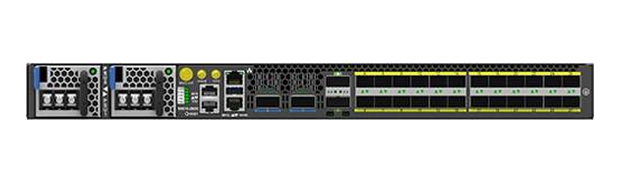

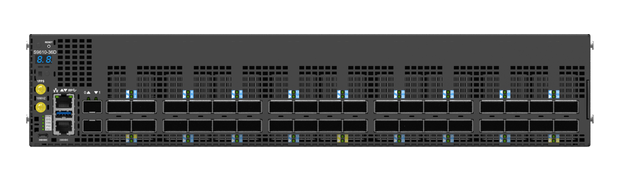
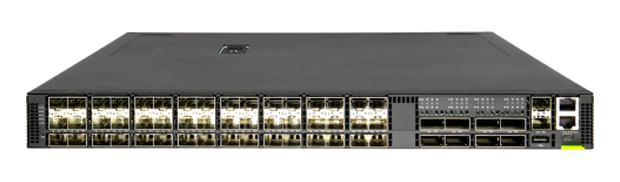
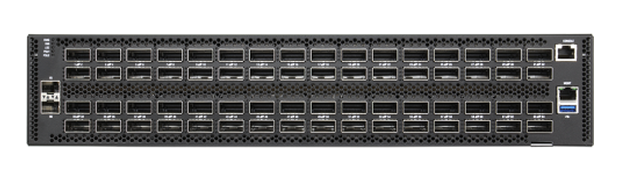
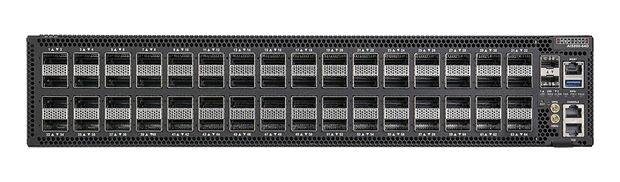
Browse the full set of qualified platforms in the Hardware Compatibility List.
Roles IP Infusion covers
SP metro & edge aggregation
SR-MPLS, EVPN-MPLS and G.8273.2 Class C timing on Broadcom Qumran and Jericho platforms, for the access and aggregation roles the Cisco NCS 540 and NCS 5500 serve.
Data-center EVPN-VXLAN leaf-spine
A BGP-EVPN-VXLAN fabric with Trident-3 leaves and Tomahawk IP spines, the standard overlay primitives (MAC-VRF, type-2 and type-5 routes) and no central controller.
400G & 800G data-center spine
High-radix spines on Broadcom Tomahawk-4 (400G) and Tomahawk-5 (800G), with PFC and ECN for lossless RoCEv2 AI fabric traffic.
IPoDWDM & 400G coherent DCI
400G ZR and OpenZR+ coherent pluggables on supported OcNOS-SP routers, with proven interoperability with optics from multiple vendors, for DCI without separate transponders.
Operators who made the move
Published customer stories where Cisco equipment was replaced, and the reason each operator gave:
A phased migration path
Assessment & lab
Capture the current IOS-XR / NX-OS config, port mix, and feature usage; map platforms against the classes above and select OcNOS editions and HCL hardware.
Week 1Pilot & parity
Run a dual-homed pilot, verify protocol and timing parity, translate route-policy and EVPN config, and stream OpenConfig telemetry to your existing collector.
Week 4Rolling cutover
Cut over region by region with a clear rollback path, retaining the same standards-based data plane and operational model throughout.
Week 12Where IP Infusion fits
IP Infusion competes on how the network is bought: merchant-silicon hardware that can go out to bid across ODMs, OcNOS licensed per edition separately from the box with a perpetual use license, and optics from more than one supplier, delivered as a finished router or switch qualified on the HCL.
Cisco, IOS-XR, IOS-XE, NX-OS, Silicon One, Nexus, Catalyst, NCS, Cisco 8000, ACI, and APIC are trademarks of Cisco Systems, Inc. Broadcom and its product names are trademarks of Broadcom Inc. All other marks are the property of their respective owners. IP Infusion is not affiliated with, endorsed by, or sponsored by Cisco Systems. Comparisons reflect publicly documented specifications as of October 2026 and are provided for evaluation purposes only.