AI fabric 拓撲:可達 16K GPU 的 rail 最佳化設計
依 GPU 數量選擇拓撲:rail 最佳化的兩層 leaf-spine pod 最多可支援 4,096 個 GPU,其上再加第三層 super-spine 最多可達 16,384 個 GPU,並以相干 DCI 跨站點互連。 選擇能在集合通訊期間讓每顆 GPU 的鏈路皆保持滿載的最小無阻塞設計。這三種設計皆在 OcNOS-DC 上運行,架構於無損 RoCEv2(PFC + ECN)的 L3 網狀架構之上,此處以 Broadcom Tomahawk 4 與 Tomahawk 5 的具體埠數估算。
符合您 GPU 數量的最小無阻塞設計
AI fabric 拓撲只有一個任務:在集合通信期間讓每個 GPU 的出向鏈路保持飽和,同時不產生尾延遲離群值。合適的拓撲是能為您的 GPU 數量做到這一點的最小拓撲,並為更大一檔規模保留回退路徑。三個參考點,附 Broadcom Tomahawk 晶片上的具體埠測算。
雙層 leaf-spine 在每 GPU 800G 下可達 4,096 個 GPU;1,024 個 GPU 的構建為 32 臺 leaf 和 16 臺 spine,共 48 臺交換器。超過 4,096 個 GPU 後,增加 super-spine 層。每一層都執行 OcNOS-DC,並採用符合其角色的版本,因此 fabric 隨叢集橫向擴展,而無需在每一步重新設計。
正在為自己的叢集進行容量規劃? AI 網路設計套件 可快速給出初步估算:它為無阻塞雙層 leaf-spine pod 設定規格,並在您跨入三層規模時給出提示。下方參考設計使用相同的無阻塞 leaf/spine 計算,並在 4,096 個 GPU 以上增加 super-spine 層,因此交換器數量與該工具一致。這裡的 rail 最佳化是指 8-NIC GPU 伺服器的布線原則(每臺 leaf 對應一個 rail,使 rail 內 AllReduce 留在 leaf 上),疊加在該無阻塞 fabric 之上:它改變的是流量局部性,而非交換器數量。粗略估算用工具,實際構建用這些設計。
雙層 pod、三層 fabric 與相干 DCI
三種參考拓撲涵蓋單一 pod、多 pod 與多站點 AI fabric,皆依 HCL 所列的 Broadcom 硬體規劃規模。
軌道最佳化單一 Pod
每台 GPU 伺服器的 8 個 NIC 分別連接至 8 個專屬的軌道葉節點,因此同 rail 的 AllReduce 始終留在一台 leaf 上,絕不穿越 spine。無阻塞 spine 承載跨 rail 流量。這是單 pod 可擴展單元,在 Tomahawk 5 上最多 4,096 個 GPU。
三層 rail 最佳化 fabric
葉、主幹與 超級脊 層級使 fabric 超越 4,096 個 GPU,在參考設計中達到 16,384 個。每個 pod 內部無阻塞,由 super-spine 平面設定跨 pod 收斂比。每一跳均採用 DLB,GLB 在 OcNOS 7.1 中實現端到端。
相干多資料中心 DCI
當一次訓練作業跨越多個資料機房時,可透過 400G 或 800G ZR / ZR+ 同調光學模組 ,置於 spine 上。站點之間無需轉發器即可實現 DCI,站內 fabric 保持不變。
軌道最佳化單一 Pod
每台 GPU 伺服器配備 8 個 NIC,每個軌道一個(一條專屬的 xCCL(NCCL / RCCL / oneCCL)集體通訊通道)。每個軌道都是各自專屬的葉節點,因此每台伺服器的 8 個 NIC 都會連接到不同的葉節點。跨軌道 N 的 AllReduce 會留在葉節點 N 之內,因此在主要的集體通訊模式下,主幹不會承受東西向流量壓力。
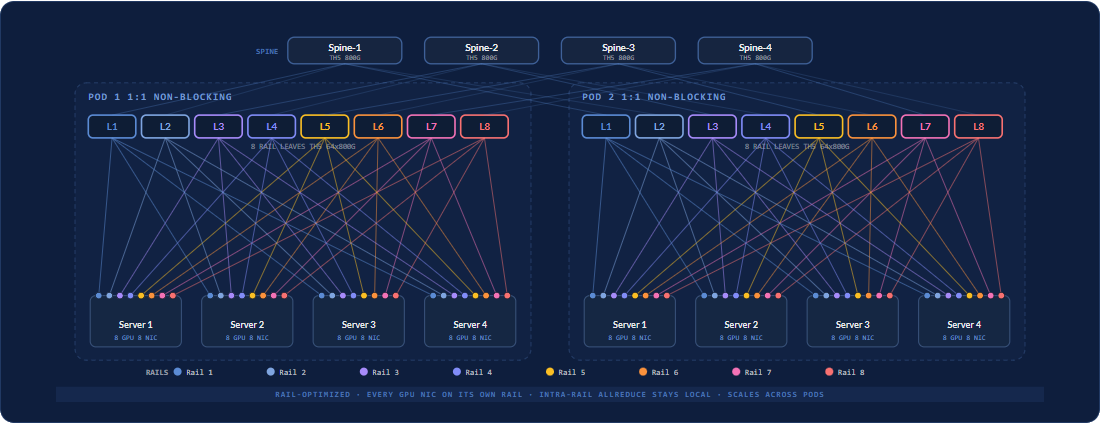
OcNOS 組件: BGP-unnumbered L3 underlay,每臺 leaf 上執行無損 RoCEv2(PFC + ECN),spine 層採用 DLB。構建於 HCL 收錄的硬體之上:從 256-GPU pod 到 4,096-GPU 雙層上限,每一層都採用 TH5 64x800G 的 leaf 和 spine(Edgecore AIS800-64D 或 UfiSpace S9321-64E),以 128x400G 執行,使每個 GPU 接入兩個 400G leaf 埠。Tomahawk 4(Edgecore AS9736-64D,64x400G)適用於每個 GPU 配備一塊 400G NIC 的 fabric。
三層 rail 最佳化 fabric:4,096 個 GPU 以上
Tomahawk 5 上的雙層 rail 最佳化 pod 在每 GPU 800G 下最多 4,096 個 GPU,此時 spine 埠耗盡。超出後,同樣的 rail 最佳化設計增加第三層:leaf、spine、super-spine。任意兩個 GPU 之間最多相隔四個交換器跳,同 leaf 和同 pod 的對端則更近。
Clos 上的難點在於把流量均勻分散,使任何鏈路都不成為熱點。方法從每流 ECMP、到動態負載平衡、再到逐封包噴灑不等,後者正是 Ultra Ethernet 採用的模型,由 NIC 處理亂序重排。另有一類做法,即 Broadcom DDC 等基於信元的排程式 fabric,把流量切分為信元並在 fabric 內部進行排程。OcNOS 以 DLB 保持 GPU 平面平衡,並於 OcNOS 7.1 加入全 fabric 的 GLB。
此圖為示意圖:繪製的層級數量有所簡化。16,384-GPU 構建在 TH5 800G 上為 512 臺 leaf / 256 臺 spine / 128 臺 super-spine。
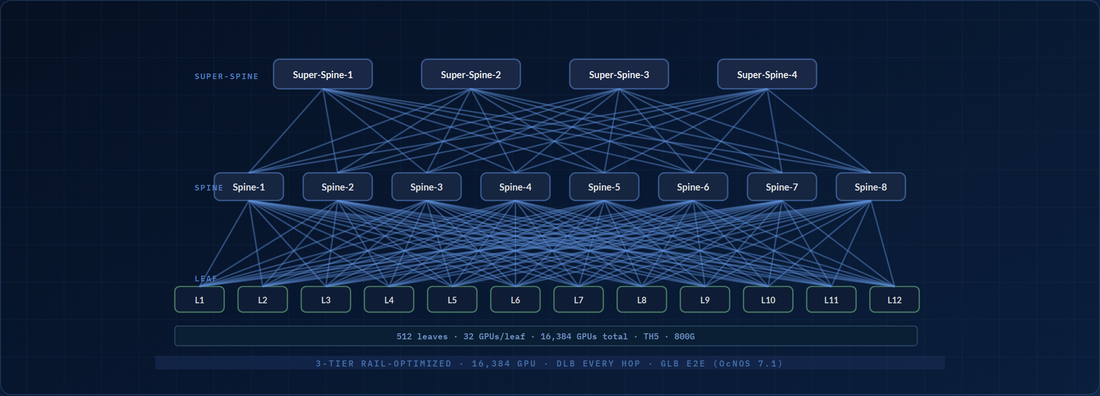
OcNOS 組件: eBGP-unnumbered L3 底層網路、RoCEv2 無損(PFC + ECN)、每一層皆採用 DLB、於 OcNOS 7.1 提供端到端 GLB,並以 gNMI 串流遙測傳送至您的可觀測性堆疊。全程建構於 HCL 列名的 TH5 64x800G 機箱之上。
超額配置比率是可調整的參數,而非固定不變的規則。 這些數量讓每個 1,024-GPU pod 達到 1:1 無阻塞,並對跨 pod 流量採用成本最佳化的約 2:1 super-spine,這正是超大規模乙太網路 fabric 所依賴的 rail 最佳化做法(已公開的大規模設計對頂層的超額訂閱要高得多,因為集合通信流量留在 pod 內部)。想要最大化的任意到任意餘量?完全無阻塞的 1:1 構建在 16,384 個 GPU 時為 512 / 512 / 256;只有 spine 和 super-spine 的數量發生變化。兩種方案均可在以下工具中建模: AI 網路設計套件.
多資料中心 AI 網路:相干 DCI
當一次訓練作業跨越多個機房時,fabric 會跨 WAN 延伸。OcNOS-DC 支援直接在 spine 上使用同調光模組,實現跨站點、免轉發器的 DCI:在 Tomahawk 4 和 Trident 4 交換器上支援 400G ZR 和 OpenZR+,在 Tomahawk 5 的 Edgecore AIS800-64D 和 UfiSpace S9321-64E 上支援 800G ZR 和 OpenZR+。各站點內部的 fabric 保持不變。
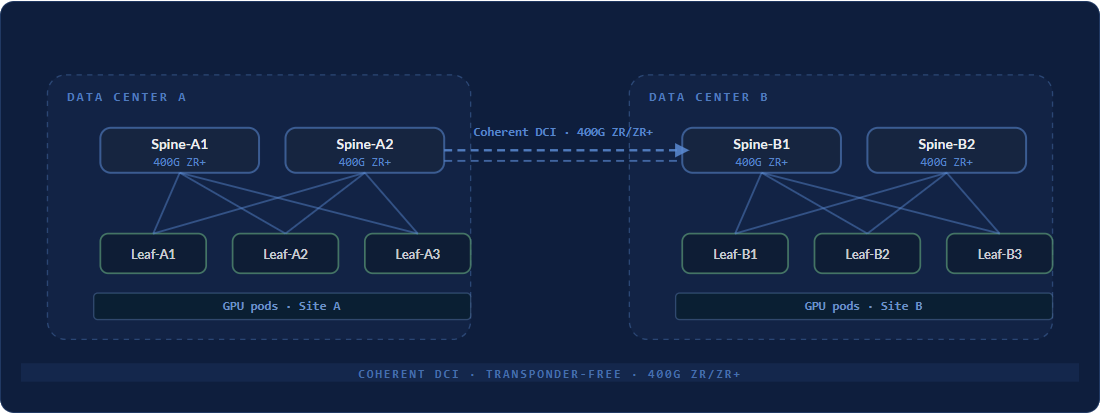
OcNOS 組件: 在具備 DWDM 能力的主幹或邊界葉節點連接埠上採用 400G 或 800G ZR/ZR+ 可插拔同調光學模組,並跨站點提供 gNMI 遙測。無需外接轉頻器。傳輸距離:400ZR 在放大後約可達 120 km;OpenZR+ 透過 oFEC 可傳輸更遠。
設計經驗法則
無論您以哪一種參考設計為基礎,幾條簡單的規則就能讓 AI 網路維持在效能與成本曲線的正確一側。
- 使拓撲與 GPU 數量相匹配。 最小規模 pod(不超過單臺 leaf 的 NIC 基數):僅用 rail-only 即可。單 pod 規模,在 Tomahawk 5 上最多 4,096 個 GPU:採用 rail 最佳化的 leaf-spine。超出後:在同樣的 rail 最佳化設計上增加 super-spine 層,pod 保持無阻塞,跨 pod 收斂比按工作負載設定。
- AI 平面始終保持 1:1 訂閱比。 儲存與 CPU 機架可承受更高的超額訂閱比率。GPU 平面則不應如此。
- 軌道數應依據 xCCL 規劃,而非布線便利。 對於配備 8 個 NIC 的 GPU 伺服器而言,8 條軌道是目前的實質標準。請勿將多條軌道合併至較少的葉節點。
- 按功耗和密度選擇晶片,而非按品牌標識。 TH4(25.6T)和 TH5(51.2T)是主力晶片;二者之間的取捨在於機架功耗和 breakout 線纜成本。
- 對照 HCL 進行驗證。 此處的每個參考方案均構建於所列硬體之上,詳見 OcNOS 硬體相容性清單;從那裡開始即可獲得一流支持。
AI 網路拓撲常見問題
什麼是軌道最佳化拓撲,它與純軌道(rail-only)拓撲有何不同?
AI fabric 何時需要第三層?
我應該使用 Tomahawk 4 還是 Tomahawk 5?
我需要 InfiniBand,還是 Ethernet 就已足夠?
向上擴充(scale-up)在哪裡結束,向外擴充(scale-out)又從何開始?
深入了解,隨身帶走。
產品規格書,以及內容比本頁更為深入的簡明技術下載資料。
OcNOS-DC 規格書
完整的 OcNOS-DC 規格:EVPN-VXLAN 與 Ethernet for AI 功能集、軟體 SKU、支援的硬體平台,以及解決方案訂購指南。
取得規格書OcNOS 800G 無損 AI Fabric
基於 Tomahawk 5 spine 的無損 RoCEv2 fabric:SKU 等級、經認證的平台與部署架構。
取得簡報EVPN-VXLAN 資料中心網路
基於 EVPN-VXLAN 的 leaf-spine 資料中心 fabric:每租戶一個 VRF 與多個 VNI、EVPN 多歸屬、BGP unnumbered 與 route-target 過濾。
取得簡報OcNOS-DC 規格書
表單簡短。提交後您的 PDF 將立即在新標籤頁中打開。
✓ 正在新標籤頁中打開您的 PDF……
如果未能自動打開,請使用下方連結。
OcNOS 800G 無損 AI Fabric
表單簡短。提交後您的 PDF 將立即在新標籤頁中打開。
✓ 正在新標籤頁中打開您的 PDF……
如果未能自動打開,請使用下方連結。
EVPN-VXLAN 資料中心網路
表單簡短。提交後您的 PDF 將立即在新標籤頁中打開。
✓ 正在新標籤頁中打開您的 PDF……
如果未能自動打開,請使用下方連結。
正在設計您的 AI fabric?我們與您一起完成埠數量的測算。
只要告訴我們工作負載與 GPU 規模,IP Infusion 的工程師就會與您一同規劃葉、主幹與超級主幹各層的規模,或者您也可以先在 AI Fabric Design Suite 中建立初步的配置。
以 OcNOS 設計整套 AI 網狀架構
從商業論證到埠數計算,無論您的建置進行到哪個階段,都能從此接續。