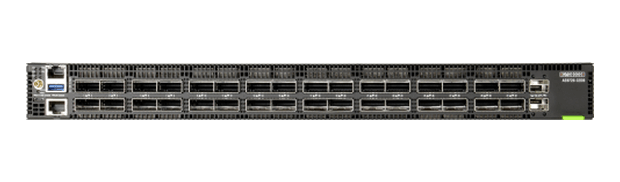
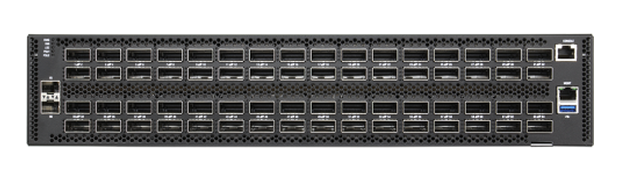
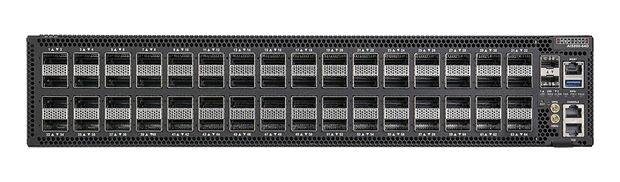
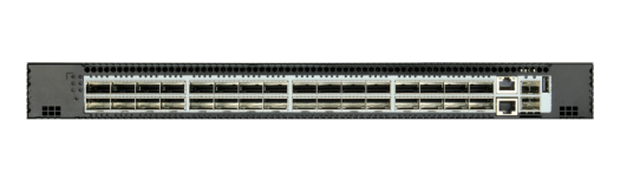
Il fabric data center leaf-spine completo, su switch aperti.
IP Infusion delivers a complete Leaf-spine EVPN-VXLAN data center fabric: 400G and 800G switches running OcNOS-DC, pre-loaded and supported under one contract. You add capacity by adding switches, a server keeps the same gateway on any leaf, and every tenant stays isolated, with a distributed anycast gateway, EVPN multihoming, a BGP underlay, and multi-tenant VRF isolation on open hardware.
Un unico switch convalidato, software e contratto di supporto.
IP Infusion qualifica lo switch e OcNOS-DC insieme e li supporta sotto un unico contratto, così il fabric che progetta è il fabric che viene consegnato. Ogni affermazione qui sotto è mappata a una piattaforma convalidata nell'elenco hardware e a una funzionalità supportata nella matrix.
18 validated data center platforms
Ogni switch leaf, spine e border è lab-qualified per platform with OcNOS-DC pre-loaded, from 100G access leaves to 800G Tomahawk 5 spines.
Verificabile nella feature matrix
EVPN-VXLAN, il gateway anycast, il multihoming, l'underlay BGP-unnumbered e i VNI multi-tenant sono ciascuno mapped to the platforms that support them.
Switch, software e RMA insieme
Un unico team possiede il software, switch, and RMA, and you still refresh the hardware and OcNOS-DC on independent cycles.
Come è costruito il fabric, e cosa offre ogni livello.
I server si collegano ai leaf, i leaf si connettono a ogni spine, e un livello border raggiunge la WAN e il secondo sito. La suddivisione del lavoro tra questi livelli è ciò che ti consente di aggiungere capacità a un livello senza toccare gli altri, e consente a un server di mantenere lo stesso gateway ovunque atterri.

Passi il mouse su ogni nodo per i dettagli di ruolo e piattaforma.
La stessa immagine OcNOS-DC esegue ogni livello, così dimensioni e concedi in licenza per ruolo e gestisci un'unica baseline software su tutto il fabric.
Leaf: la rampa di accesso di ogni rack
Il leaf termina VXLAN e ospita il distributed anycast gateway, so a server sees the same gateway IP and MAC on any leaf. Move or add a workload and it keeps its default route with no re-addressing.
Aggiungi capacità server aggiungendo leaf, su uno switch Trident 4 400G.
Spine: banda per l'intero fabric
Lo spine trasporta la Underlay BGP-unnumbered, reflects EVPN routes, and spreads traffic with overlay ECMP. It holds no tunnel endpoints, so adding a spine adds bandwidth to the whole fabric.
Scali più ampio aggiungendo spine, senza ricablare i leaf.
Border leaf: l'uscita controllata del fabric
Il border leaf esegue il Gateway Layer 3 EVPN and advertises each tenant's IP prefixes outward, VRF by VRF. It is your one controlled handoff to the WAN and to the second site.
È anche dove due fabric si cuciono insieme per l'interconnessione coerente.
Underlay: cablaggio plug-and-peer
Ogni collegamento leaf-spine esegue BGP-unnumbered with extended next-hop encoding, so a link peers with no per-interface IP to assign or track. Cabling a new link is plug-and-peer.
Questo è ciò che rende il fabric rapido da cablare e rapido da far crescere.
Come lo switch costruisce il fabric.
Il fabric cresce aggiungendo switch, non ri-architettando, ed EVPN-VXLAN è ciò che fa funzionare tutto questo. VXLAN incapsula in tunnel il traffico tenant tra i leaf sull'underlay IP, e EVPN annuncia dove risiede ogni MAC, host e prefisso, so the switch forwards from a learned control plane instead of flooding to find a host.
EVPN annuncia MAC, IP e prefissi
Il leaf esegue il EVPN Layer 2 per VXLAN control plane and the prefix route for EVPN IRB, so EVPN carries MAC and IP host routes and IP prefixes across the fabric and each leaf forwards from what it has learned.
Gateway anycast distribuito
Ogni leaf presenta il same gateway IP and MAC for a subnet, using multiple IP addresses on the IRB interface for the anycast gateway, so a server is always one hop from its gateway no matter which leaf it sits behind.
Multihoming EVPN, active-active
Multihoming EVPN Layer 2 per VXLAN attaches a server to two or more leaves in active-active mode over an Ethernet Segment. Both links forward, and there is no MLAG peer-link between the leaves.
Underlay BGP-unnumbered
Ogni collegamento leaf-spine esegue VXLAN EVPN con BGP unnumbered using extended next-hop encoding. A link peers without a per-interface IP address, which keeps the underlay simple to cable and grow.
Isolamento VRF sui VNI
Ogni tenant vive nella propria VRF sui propri VNI, e inter-VRF route leaking over EVPN-VXLAN passes only the prefixes you permit, so isolation is the default and any sharing between tenants is explicit.
Overlay ECMP e route reflection
Overlay multipath a costo uguale spreads traffic across every spine, and EVPN route reflection in the fabric passes routes between leaves without a full mesh, so the fabric scales wider by adding spines.
Consulti il dettaglio della funzionalità nella EVPN-VXLAN e EVPN multihoming technology pages →
Dallo switch nudo a leaf di produzione in pochi minuti.
Un nuovo switch si avvia, recupera la sua configurazione e si unisce al fabric senza sessione console. Da lì gestisce il fabric come codice, con telemetria in streaming e configurazione model-driven su ogni piattaforma.
ZTP at boot
Uno switch recupera la sua immagine e configurazione tramite Zero Touch Provisioning, così passa dalla scatola a leaf di produzione senza una sessione console.
gNMI streaming
gNMI streams telemetry to your collector, dial-in and dial-out, so leaf and spine state is a live feed instead of a poll.
NETCONF, OpenConfig, Ansible
I modelli NETCONF e OpenConfig con Ansible consentono di applicare e verificare lo stato EVPN e VXLAN come codice, in modo coerente su tutto il fabric.
sFlow, BFD, graceful restart
sFlow samples traffic for visibility, BFD detects a failure fast, and BGP graceful restart keeps the fabric forwarding while a neighbor reconverges.
Gli stessi switch eseguono anche il set RoCEv2 senza perdite per il traffico GPU, con PFC, ECN e DCQCN. Per un fabric di training GPU, consulti il AI Fabric solution →
Interconnetti due fabric su DCI coerente.
Quando un operatore gestisce due data center, i tenant di uno devono raggiungere i tenant dell'altro, e il fabric si estende su entrambi i siti come un'unica rete. Il border leaf in each fabric stitches the two VXLAN Layer 3 domains, each fabric advertises its tenant IP prefixes to the other over EVPN, and a 400G OpenZR+ coherent link carries the traffic between the sites, using the same routed-optical technique already proven on service provider routers.
Il border leaf cuce insieme i domini L3
The Gateway Layer 3 EVPN on each border leaf performs VXLAN Layer 3 stitching, so one fabric's VXLAN domain hands off to the other at Layer 3 rather than bridging one flat domain across the WAN.
Prefissi Type-5, per-tenant
Ogni fabric annuncia i suoi prefissi IP tenant all'altro come Route EVPN IP-prefix, reflected by the route servers, and inter-VRF route leaking keeps each tenant's VRF isolated across both sites.
400G ZR+ coerente, senza transponder
Uno switch con capacità ZR+ ospita un 400G OpenZR+ coherent optic directly in a faceplate port and lights the wavelength, with no separate transponder shelf. The same 400G coherent DCI runs on data center switches like the Edgecore AS9726-32DB and on the service provider routers already deployed for interconnect, and the 800G Tomahawk 5 fabric scales the port capacity behind it.
See it end to end
Commuta la vista tra il fabric di un sito, la cucitura DCI coerente tra i siti e il fabric remoto.
Cucitura DCI coerente. I due border leaf cuciono i fabric a Layer 3 e accendono un collegamento coerente 400G OpenZR+ tra i siti. Ogni fabric annuncia i suoi prefissi IP tenant all'altro come route EVPN Type-5, e l'isolamento VRF per-tenant è preservato tra entrambi i siti.
Quale switch convalidato per quale ruolo.
IP Infusion fornisce il fabric su 18 validated data center platforms from Edgecore and UfiSpace, each lab-qualified per platform with OcNOS-DC pre-loaded. Leaves size on port count and the anycast gateway; spines size on fabric width; the interconnect leaf sizes on the coherent optic.
| Ruolo | Validated switch | Silicio e capacità | Perché si adatta al ruolo |
|---|---|---|---|
| Leaf (400G) | Edgecore AS9726-32DB / UfiSpace S9300-32D | Broadcom Trident 4, 12.8 Tbps, 400G | Il livello VTEP: porte rivolte ai server, il gateway anycast distribuito e il multihoming EVPN. |
| Spine (400G) | Edgecore AS9736-64D | Broadcom Tomahawk 4, 25.6 Tbps, 400G | ECMP dell'underlay e route reflection EVPN, nessun VTEP, dimensionato per l'ampiezza del fabric. |
| Spine / super-spine (800G) | Edgecore AIS800-64D / UfiSpace S9321-64E | Broadcom Tomahawk 5, 51.2 Tbps, 800G | Scale-out a 800G per i fabric più grandi. L'AIS800-64D utilizza ottiche QSFP-DD800. |
| Leaf di interconnessione (coerente 400G) | Edgecore AS9726-32DB | Broadcom Trident 4, 12.8 Tbps, 32×400G, 400G ZR+ coherent | Colloca un pluggable coerente 400G OpenZR+ in una porta QSFP-DD e accende direttamente la lunghezza d'onda di interconnessione, senza transponder esterno. |
| Leaf / ToR 100G | Edgecore AS7726-32X / UfiSpace S9110-32X | Broadcom Trident 3, 3.2 Tbps, 100G | Leaf del livello di accesso per rack server 25G e 100G. |
18 validated data center platforms. See every validated platform, including the rest of the portfolio, in the hardware compatibility list, e abbina le funzionalità all'hardware nella matrice delle funzionalità.
Confronta l'intero portfolio di silicio Broadcom su cui gira OcNOS, StrataXGS e StrataDNX →
Come dimensionare il fabric
- Leaf tier. Metti i leaf su Trident 4 400G per il VTEP, il gateway anycast e il multihoming EVPN, o su un leaf Trident 3 100G per rack server 25G e 100G.
- Spine tier. Metti gli spine su Tomahawk 4 400G, o su Tomahawk 5 800G quando il fabric deve scalare più ampio, e aggiungi spine invece di toccare i leaf.
- Interconnect leaf. Usa l'AS9726-32DB con pluggable coerenti 400G OpenZR+ nelle sue porte QSFP-DD quando il fabric si estende a un secondo sito, così il leaf di interconnessione accende la lunghezza d'onda direttamente.
- One contract. IP Infusion convalida e supporta ogni ruolo come un unico sistema, e lo switch e OcNOS-DC si aggiornano su cicli indipendenti.
Configura un leaf VTEP.
Each leaf terminates VXLAN tunnels, hosts the distributed anycast gateway, and runs the EVPN address family in BGP. Below is a representative OcNOS-DC leaf configuration: VXLAN with integrated routing and bridging, a tenant with its layer 3 VNI and bridge domain, the distributed anycast gateway with a shared MAC, the VNI to tenant mapping, and EVPN under BGP.
! Leaf VTEP: VXLAN overlay, distributed anycast gateway, EVPN in BGP
configure terminal
nvo vxlan enable
nvo vxlan irb
evpn irb-forwarding anycast-gateway-mac 0000.0000.1111
ip vrf tenant1
l3vni 5010
mac vrf tenant1_l2
rd 10.0.0.1:10
route-target both 100:10
interface irb10
ip vrf forwarding tenant1
ip address 10.10.10.1/24 anycast
evpn irb-if-forwarding anycast-gateway-mac
nvo vxlan id 10 ingress-replication inner-vid-disabled
vxlan host-reachability-protocol evpn-bgp tenant1_l2
evpn irb10
nvo vxlan vtep-ip-global 10.0.0.1
router bgp 65001
neighbor 10.0.1.1 remote-as 65000
address-family l2vpn evpn
neighbor 10.0.1.1 activate
Cosa fa ogni riga
nvo vxlan enableenvo vxlan irbturn on VXLAN and integrated routing and bridging, so the leaf both switches inside a subnet and routes between subnets over the fabric.evpn irb-forwarding anycast-gateway-mac 0000.0000.1111sets one shared gateway MAC for the whole fabric, so every leaf answers as the same default gateway.ip vrf tenant1withl3vni 5010gives the tenant its own routing table and the layer 3 VNI that carries routed traffic between subnets across the fabric.mac vrf tenant1_l2with itsrderoute-target bothgives the tenant bridge domain a route distinguisher and import and export targets, so EVPN keeps each tenant's MAC and IP routes separate.interface irb10is the tenant gateway:ip vrf forwarding tenant1binds it to the tenant table,ip addresssets the gateway IP, andevpn irb-if-forwarding anycast-gateway-macapplies the shared anycast MAC to this interface.- The
nvo vxlan id 10block maps VNI 10 to the tenant, uses ingress replication for broadcast and multicast traffic, and setshost-reachability-protocol evpn-bgpso BGP EVPN learns host reachability. nvo vxlan vtep-ip-global 10.0.0.1sets the tunnel-endpoint address, a loopback, that identifies this leaf in the fabric.router bgp 65001withneighbor 10.0.1.1 remote-as 65000forms the session to the spine, and theaddress-family l2vpn evpnblock activates EVPN so the leaf advertises and learns MAC, IP, and prefix routes.
These are OcNOS-DC VXLAN and EVPN commands from the OcNOS-DC configuration guide, shown with example VNIs, VRF names, and addresses rather than copied from one device. Confirm the exact IDs, route targets, and addresses for your fabric against the OcNOS-DC VXLAN and EVPN configuration guide at documentation.ipinfusion.com.
Switch fabric aperto rispetto a uno switch data center proprietario.
Rispetto ad Arista o Cisco, la questione del fabric è se uno switch aperto esegua leaf-spine EVPN-VXLAN in modo altrettanto completo. OcNOS-DC lo fa, su silicio merchant che l'operatore può acquistare da più di un fornitore, il tutto sotto un unico contratto di supporto.
| Fabric capability | Switch aperto (OcNOS-DC) | Proprietario (Arista EOS / Cisco NX-OS / Juniper Junos) |
|---|---|---|
| Fabric EVPN-VXLAN leaf-spine | ✓ details → | ✓ |
| Gateway anycast distribuito | ✓ | ✓ |
| Multihoming EVPN (ESI-LAG, nessuna dipendenza da MLAG) | ✓ | ✓ |
| Underlay BGP-unnumbered | ✓ details → | ✓ |
| Isolamento VRF e VNI multi-tenant | ✓ | ✓ |
| ZTP, gNMI, NETCONF e OpenConfig | ✓ | ✓ |
| 800G su Tomahawk 5 | ✓ | ✓ |
| Approvvigionamento hardware | Silicio merchant aperto da più fornitori | Switch single-vendor |
| Consegna e supporto | Switch completo, un unico contratto di supporto, rinnovo di switch e software separatamente | Vendor-bundled |
Arista, EOS, Cisco, NX-OS, Nexus, Juniper e Junos sono marchi dei rispettivi proprietari. IP Infusion non è affiliata e non approva questi fornitori; il confronto riflette le capacità di OcNOS-DC verificabili nella matrice delle funzionalità.
Solution brief e datasheet.
Il brief del fabric EVPN-VXLAN, il brief DCI routed-optical e il datasheet OcNOS-DC da condividere con il suo team. Modulo rapido, e il PDF si scarica immediatamente.
EVPN-VXLAN data center fabric
Come si incastra il fabric leaf-spine: EVPN-VXLAN, il gateway anycast, il multihoming e i VNI multi-tenant su switch aperti.
Scarica il briefDCI Routed Optical con 400G OpenZR+
La tecnica di interconnessione routed-optical: un'ottica coerente 400G OpenZR+ nel border leaf accende la lunghezza d'onda tra i siti, senza transponder separato.
Scarica il briefDatasheet OcNOS-DC
La panoramica OcNOS-DC: il set di funzionalità del fabric, l'hardware data center convalidato e le operazioni, in un unico PDF.
Ottieni il datasheetDomande sul fabric data center.
Consulti il fabric data center aperto.
Scopra come IP Infusion fornisce il fabric EVPN-VXLAN leaf-spine come un unico sistema, oppure ci contatti per mappare i suoi leaf, spine e interconnessione sulle piattaforme convalidate corrette.
DCI Routed Optical con 400G OpenZR+
Modulo breve. il PDF verrà scaricato subito dopo l'invio.
✓ Opening your PDF in a new tab.
Se non si è aperto, usi il link qui sotto.
EVPN-VXLAN data center fabric
Modulo breve. il PDF verrà scaricato subito dopo l'invio.
✓ Opening your PDF in a new tab.
Se non si è aperto, usi il link qui sotto.
Datasheet OcNOS-DC
Modulo breve. il PDF verrà scaricato subito dopo l'invio.
✓ Opening your PDF in a new tab.
Se non si è aperto, usi il link qui sotto.
Correlati dal blog
Overlay ECMP in un Fabric EVPN-VXLAN Leaf-Spine, Parte 1
Come l'overlay ECMP EVPN-VXLAN bilancia il carico su un fabric data center Clos leaf-spine
Leggi il post →Overlay ECMP in un Fabric EVPN-VXLAN Leaf-Spine, Parte 2
La seconda parte della guida overlay ECMP EVPN-VXLAN per il fabric data center
Leggi il post →