
オープンスイッチ上の完全なリーフスパインデータセンターファブリック。
IP Infusion は、完成された EVPN-VXLAN リーフ-スパイン データセンターファブリックを提供します。400G および 800G スイッチで稼働するのは OcNOS-DCで、プリロード済み、1 つの契約でサポートします。スイッチを追加するだけで容量を拡張でき、サーバーはどのリーフでも同じゲートウェイを維持し、すべてのテナントが分離されます。オープンハードウェア上で、分散エニーキャストゲートウェイ、EVPN マルチホーミング、BGP アンダーレイ、マルチテナント VRF 分離を実現します。
検証済みのスイッチ、ソフトウェア、サポート契約を1つに。
IP Infusion はスイッチと OcNOS-DC を一体で認定し、一つの契約でサポートします。設計したファブリックがそのまま出荷されるファブリックになります。以下の各記載は、ハードウェアリストの検証済みプラットフォームと機能マトリクスのサポート済み機能に対応します。
検証済みデータセンタープラットフォーム 18 機種
各リーフ、スパイン、ボーダースイッチは プラットフォームごとにラボで認定済み で、100G アクセスリーフから 800G Tomahawk 5 スパインまで、OcNOS-DC をプリロードしています。
機能マトリクスで検証可能
EVPN-VXLAN、エニーキャストゲートウェイ、マルチホーミング、BGP-unnumberedアンダーレイ、マルチテナントVNIはそれぞれ 対応するプラットフォームに マッピングされています。
スイッチ、ソフトウェア、RMA を一体で
1つのチームが担うのは ソフトウェア、スイッチ、RMAです。それでもハードウェアと OcNOS-DC は、それぞれ独立したサイクルで更新できます。
ファブリックの構築方法と、各ティアが提供する価値。
サーバーはリーフに接続し、リーフはすべてのスパインに接続し、ボーダーティアが WAN と第 2 サイトへ到達します。これらのティア間で処理を分割することにより、他のティアに手を触れずに 1 つのティアへ容量を追加でき、サーバーはどこに配置されても同一のゲートウェイを保持可能。
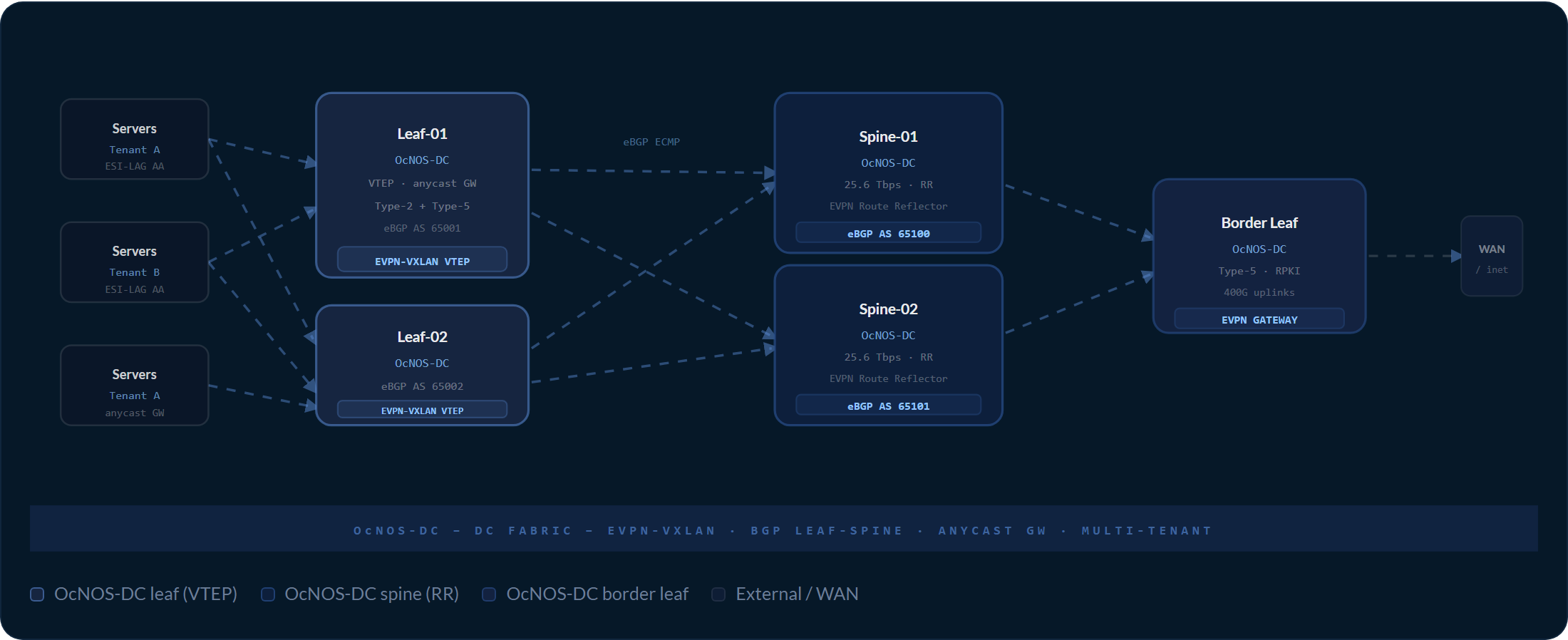
各ノードにカーソルを合わせると役割およびプラットフォームの詳細が表示されます。
同一の OcNOS-DC イメージがすべてのティアを実行するため、役割ごとにサイジングおよびライセンス付与を行い、ファブリック全体で 1 つのソフトウェアベースラインを運用可能。
リーフ: 各ラックのオンランプ
リーフは VXLAN を終端し、次をホストします: 分散エニーキャストゲートウェイにより、サーバーはどのリーフでも同じゲートウェイ IP と MAC を認識します。ワークロードを移動または追加しても、再アドレッシングなしでデフォルトルートを維持します。
Trident 4 400Gスイッチ上でleafを追加することにより、サーバー容量を拡張。
スパイン:ファブリック全体のための帯域幅
スパインは次を運びます: BGP-unnumberedアンダーレイを実行し、EVPN ルートをリフレクトし、オーバーレイ ECMP でトラフィックを分散します。トンネルエンドポイントを持たないため、スパインを追加するとファブリック全体の帯域幅が増加します。
leafを再配線することなくspineを追加し、より広くスケール。
border leaf:ファブリックの制御された出口
ボーダーリーフは次を実行します: EVPN Layer 3ゲートウェイ として機能し、各テナントの IP プレフィックスを VRF ごとに外部へアドバタイズします。WAN と 2 つ目のサイトへの、唯一の制御されたハンドオフです。
ここは 2 つのファブリックがコヒーレント相互接続のために結合する地点でもあります。
アンダーレイ:プラグアンドピア方式の配線
各リーフスパインリンクは次を実行 BGP-unnumbered (拡張ネクストホップエンコーディング付き)。リンクごとに割り当てや管理が必要なインターフェース IP はなく、新しいリンクは配線するだけでピアリングします。
これが、ファブリックの配線と拡張を迅速にする理由。
スイッチがファブリックを構築する仕組み。
ファブリックは、再設計ではなくスイッチの追加によって拡張し、それを可能にするのが EVPN-VXLAN です。VXLAN は IP アンダーレイ上でリーフ間のテナントトラフィックをトンネリングし、 EVPNはすべてのMAC、ホスト、プレフィックスの所在をアドバタイズするため、スイッチはホストを探すためにフラッディングするのではなく、学習したコントロールプレーンに基づいて転送します。
EVPNはMAC、IP、プレフィックスをアドバタイズ
リーフは次を実行します: VXLAN 向け Layer 2 EVPN のコントロールプレーンと EVPN IRB 用のプレフィックスルートにより、EVPN が MAC と IP のホストルートおよび IP プレフィックスをファブリック全体に伝え、各リーフは学習した情報に基づいて転送します。
分散エニーキャストゲートウェイ
各リーフは次を提示 同一のゲートウェイ IP と MAC (サブネットごと)。エニーキャストゲートウェイ用に IRB インターフェースで複数の IP アドレスを使用するため、サーバーはどのリーフの配下にあっても、常にゲートウェイまで 1 ホップです。
EVPNマルチホーミング、アクティブアクティブ
VXLAN 向け Layer 2 EVPN マルチホーミング は、イーサネットセグメント上でサーバーを 2 台以上のリーフにアクティブ/アクティブで接続します。両方のリンクが転送を行い、リーフ間に MLAG ピアリンクはありません。
BGP-unnumberedアンダーレイ
各リーフスパインリンクは次を実行 BGP unnumbered併用のVXLAN EVPN (拡張ネクストホップエンコーディングを使用)。リンクはインターフェースごとの IP アドレスなしでピアリングするため、アンダーレイの配線と拡張がシンプルになります。
VNI上でのVRF分離
各テナントは自身のVNI上の自身のVRF内に存在し、さらに EVPN-VXLAN 上の VRF 間ルートリーキング は許可したプレフィックスのみを通過させるため、分離が既定の状態となり、テナント間の共有はすべて明示的に行われます。
オーバーレイECMPとルートリフレクション
オーバーレイの等コストマルチパス はすべてのスパインにトラフィックを分散し、ファブリック内の EVPN ルートリフレクションがフルメッシュなしでリーフ間にルートを伝えるため、スパインを追加することでファブリックを横方向に拡張します。
機能詳細を次で確認: EVPN-VXLAN と EVPN マルチホーミング テクノロジーページ →
素のスイッチから本番リーフまで数分で。
新しいスイッチは起動し、構成を取得し、コンソールセッションなしでファブリックへ参加します。そこからは、あらゆるプラットフォームでストリーミングテレメトリとモデル駆動型構成により、ファブリックをコードとして運用します。
起動時の ZTP
スイッチはZero Touch Provisioningを通じてイメージと構成を取得するため、コンソールセッションなしで箱から本番leafへと立ち上がります。
gNMI ストリーミング
gNMI はダイヤルインとダイヤルアウトの両方でテレメトリをコレクターにストリーミングするため、リーフとスパインの状態をポーリングではなくライブフィードとして取得します。
NETCONF、OpenConfig、Ansible
Ansible と組み合わせた NETCONF および OpenConfig モデルにより、EVPN および VXLAN の状態をコードとしてプッシュ・検証し、ファブリック全体で一貫性を保てます。
sFlow、BFD、グレースフルリスタート
sFlow は可視化のためにトラフィックをサンプリングし、BFD は障害を迅速に検出し、BGP グレースフルリスタートはネイバーの再収束中もファブリックの転送を維持します。
同一のスイッチは、PFC、ECN、DCQCN を備え、GPU トラフィック向けのロスレス RoCEv2 セットも実行します。GPU トレーニングファブリックについては、次をご覧ください: AI Fabric ソリューション →
2 つのファブリックをコヒーレント DCI 越しに相互接続します。
事業者が2つのデータセンターを運用する場合、一方のテナントが他方のテナントへ到達する必要があり、ファブリックは両サイトにまたがり1つのネットワークとして拡張。 各ファブリックのボーダーリーフが 2 つの VXLAN レイヤー 3 ドメインを接続し、各ファブリックは EVPN でテナントの IP プレフィックスを相手側にアドバタイズし、400G OpenZR+ コヒーレントリンクが拠点間のトラフィックを伝送します。これは、サービスプロバイダールーターですでに実績のあるルーテッド光の手法と同じです。
border leafがL3ドメインを接続
EVPN レイヤー 3 ゲートウェイ (各ボーダーリーフ上)が VXLAN レイヤー 3 ステッチングを行うため、一方のファブリックの VXLAN ドメインは、WAN をまたいで 1 つのフラットなドメインをブリッジするのではなく、レイヤー 3 で他方に引き渡されます。
Type-5プレフィックス(テナントごと)
各ファブリックは自身のテナントIPプレフィックスを相手側へ次としてアドバタイズ EVPN IPプレフィックス経路として伝送され、ルートサーバーによってリフレクトされます。VRF 間ルートリーキングにより、両拠点にわたって各テナントの VRF は分離されたまま維持されます。
400G ZR+ コヒーレント、トランスポンダー不要
ZR+対応スイッチは、次を搭載します 400G OpenZR+ コヒーレント光モジュールをフロントパネルのポートに直接装着して波長を点灯するため、独立したトランスポンダーシェルフは不要です。同じ 400G コヒーレント DCI は、Edgecore AS9726-32DB などのデータセンタースイッチでも、相互接続用にすでに導入されているサービスプロバイダールーターでも動作し、800G Tomahawk 5 ファブリックがその背後のポート容量を拡張します。
エンドツーエンドで見る
1 サイトのファブリック、サイト間のコヒーレント DCI ステッチ、リモートファブリックの間でビューを切り替え。
コヒーレントDCIステッチ。 2 つのボーダーリーフがレイヤー 3 でファブリックをステッチし、サイト間で 400G OpenZR+ コヒーレントリンクを発光します。各ファブリックは、自らのテナント IP プレフィックスを EVPN Type-5 ルートとして相手側へアドバタイズし、テナントごとの VRF 分離が両サイトにわたって維持されます。
サイト A ファブリック。 1 つの EVPN-VXLAN リーフスパインファブリック。リーフはサーバーが接続する VXLAN トンネルエンドポイントとなり、スパインは BGP unnumbered のアンダーレイを伝送して EVPN ルートをリフレクトし、ボーダーリーフはインターコネクトに向けて EVPN レイヤー 3 ゲートウェイを実行します。 コヒーレントDCIステッチ。 2 つのボーダーリーフがレイヤー 3 でファブリックをステッチし、サイト間で 400G OpenZR+ コヒーレントリンクを発光します。各ファブリックは、自らのテナント IP プレフィックスを EVPN Type-5 ルートとして相手側へアドバタイズし、テナントごとの VRF 分離が両サイトにわたって維持されます。 サイト B ファブリック。 リモートファブリックはサイト A のミラー構成です。独自のリーフ、スパイン、ボーダーリーフが同じ EVPN-VXLAN 機能を実行するため、サイト B のテナントはステッチされたインターコネクトを介してサイト A のテナントに到達します。どのロールにどの検証済みスイッチか。
IP Infusion は次の基盤でファブリックを提供します: 検証済みデータセンタープラットフォーム 18 機種 (Edgecore および UfiSpace 製)は、それぞれプラットフォームごとにラボで認定され、OcNOS-DC がプリロードされています。リーフはポート数とエニーキャストゲートウェイで、スパインはファブリックの幅で、相互接続用リーフはコヒーレント光モジュールでサイジングします。
| 役割 | 検証済みスイッチ | シリコンと容量 | そのロールに適合する理由 |
|---|---|---|---|
| リーフ(400G) | Edgecore AS9726-32DB/UfiSpace S9300-32D | Broadcom Trident 4、12.8 Tbps、400G | VTEP ティア:サーバー向けポート、分散アニーキャストゲートウェイ、EVPN マルチホーミング。 |
| スパイン(400G) | Edgecore AS9736-64D | Broadcom Tomahawk 4、25.6 Tbps、400G | アンダーレイECMPとEVPNルートリフレクション。VTEPなし、ファブリック幅に合わせたサイジング。 |
| スパイン / スーパースパイン(800G) | Edgecore AIS800-64D/UfiSpace S9321-64E | Broadcom Tomahawk 5、51.2 Tbps、800G | 最大規模のファブリックに向けた800Gスケールアウト。AIS800-64DはQSFP-DD800光モジュールを使用します。 |
| 相互接続リーフ (400G コヒーレント) | Edgecore AS9726-32DB | Broadcom Trident 4、12.8 Tbps、32×400G、400G ZR+ コヒーレント | 400G OpenZR+ コヒーレントプラガブルを QSFP-DD ポートに装着し、外部トランスポンダーなしでインターコネクト波長を直接発光。 |
| 100G リーフ/ToR | Edgecore AS7726-32X/UfiSpace S9110-32X | Broadcom Trident 3、3.2 Tbps、100G | 25Gおよび100Gサーバーラック向けのアクセス層leaf。 |
検証済みデータセンタープラットフォーム 18 機種。ポートフォリオの残りを含むすべての検証済みプラットフォームは、次でご確認ください: ハードウェア互換性リスト, 機能とハードウェアの対応は次でご確認いただけます フィーチャーマトリクス.
OcNOS が対応する Broadcom シリコンのフルポートフォリオ、StrataXGS と StrataDNX の比較 →
ファブリックのサイジング方法
- リーフ層。 VTEP、anycastゲートウェイ、EVPNマルチホーミング向けにはleafを400G Trident 4に、25Gおよび100Gのサーバーラック向けには100G Trident 3のleafに配置。
- スパイン層。 spineは400G Tomahawk 4に配置、ファブリックをより広くスケールさせる必要がある場合は800G Tomahawk 5に配置し、leafには手を加えずspineを追加。
- 相互接続リーフ。 ファブリックを第2サイトへ拡張する際は、AS9726-32DBのQSFP-DDポートに400G OpenZR+コヒーレントプラガブルを装着し、相互接続leafが波長を直接点灯。
- 1 つの契約。 IP Infusion はすべてのロールを一つのシステムとして検証・サポートし、スイッチと OcNOS-DC は独立したサイクルで更新されます。
leaf VTEPを構成します。
各リーフは VXLAN トンネルを終端し、分散エニーキャストゲートウェイをホストし、BGP で EVPN アドレスファミリーを実行します。以下は代表的な OcNOS-DC リーフ構成です:統合ルーティング/ブリッジング付きの VXLAN、レイヤー 3 VNI とブリッジドメインを持つテナント、共有 MAC による分散エニーキャストゲートウェイ、VNI とテナントのマッピング、BGP 配下の EVPN。
! Leaf VTEP: VXLAN overlay, distributed anycast gateway, EVPN in BGP
configure terminal
nvo vxlan enable
nvo vxlan irb
evpn irb-forwarding anycast-gateway-mac 0000.0000.1111
ip vrf tenant1
 l3vni 5010
mac vrf tenant1_l2
 rd 10.0.0.1:10
 route-target both 100:10
interface irb10
 ip vrf forwarding tenant1
 ip address 10.10.10.1/24 anycast
 evpn irb-if-forwarding anycast-gateway-mac
nvo vxlan id 10 ingress-replication inner-vid-disabled
 vxlan host-reachability-protocol evpn-bgp tenant1_l2
 evpn irb10
nvo vxlan vtep-ip-global 10.0.0.1
ルーター bgp 65001
 neighbor 10.0.1.1 remote-as 65000
 address-family l2vpn evpn
  neighbor 10.0.1.1 activate
各行の役割
nvo vxlan enableとnvo vxlan irbで VXLAN と統合ルーティング/ブリッジングを有効にし、リーフがサブネット内のスイッチングとファブリック経由のサブネット間ルーティングの両方を行うようにします。evpn irb-forwarding anycast-gateway-mac 0000.0000.1111は、ファブリック全体で共有するゲートウェイ MAC を 1 つ設定するため、すべてのリーフが同じデフォルトゲートウェイとして応答します。ip vrf tenant1とl3vni 5010を組み合わせて、テナントに専用のルーティングテーブルと、ファブリック上でサブネット間のルーティングトラフィックを伝送するレイヤー 3 VNI を割り当てます。mac vrf tenant1_l2でテナントのブリッジドメインを定義し、そのrdとroute-target bothが、ルート識別子とインポート/エクスポートターゲットを付与するため、EVPN は各テナントの MAC と IP のルートを分離して保持します。interface irb10がテナントのゲートウェイです:ip vrf forwarding tenant1でテナントのテーブルにバインドし、ip addressでゲートウェイ IP を設定し、evpn irb-if-forwarding anycast-gateway-macで共有エニーキャスト MAC をこのインターフェースに適用します。nvo vxlan id 10ブロックは VNI 10 をテナントにマッピングし、ブロードキャストとマルチキャストのトラフィックにイングレスレプリケーションを使用し、次を設定します:host-reachability-protocol evpn-bgp。これにより BGP EVPN がホストの到達性を学習します。nvo vxlan vtep-ip-global 10.0.0.1は、ファブリック内でこのリーフを識別するトンネルエンドポイントアドレス(ループバック)を設定します。router bgp 65001とneighbor 10.0.1.1 remote-as 65000を組み合わせてスパインとのセッションを確立し、address-family l2vpn evpnブロックで EVPN を有効化するため、リーフは MAC、IP、プレフィックスのルートをアドバタイズおよび学習します。
これらは OcNOS-DC 構成ガイドに記載された OcNOS-DC の VXLAN および EVPN コマンドで、特定の機器からコピーしたものではなく、例示用の VNI、VRF 名、アドレスで示しています。ご使用のファブリックに合わせた正確な ID、ルートターゲット、アドレスは、次の OcNOS-DC VXLAN および EVPN 構成ガイドと照合してご確認ください: documentation.ipinfusion.com.
オープンなファブリックスイッチとプロプライエタリなデータセンタースイッチの比較。
AristaやCiscoと比べたとき、ファブリックの論点は、オープンスイッチがEVPN-VXLAN leaf-spineを同等に完全に動かせるかどうかです。OcNOS-DCはそれを実現します。事業者が複数ベンダーから購入できるマーチャントシリコン上で、そのすべてを単一のサポート契約でカバーします。
| ファブリック機能 | オープンなスイッチ(OcNOS-DC) | プロプライエタリ(Arista EOS/Cisco NX-OS/Juniper Junos) |
|---|---|---|
| EVPN-VXLANリーフスパインファブリック | ✓ 詳細 → | ✓ |
| 分散エニーキャストゲートウェイ | ✓ | ✓ |
| EVPNマルチホーミング(ESI-LAG、MLAG依存なし) | ✓ | ✓ |
| BGP-unnumberedアンダーレイ | ✓ 詳細 → | ✓ |
| マルチテナントの VRF および VNI 分離 | ✓ | ✓ |
| ZTP、gNMI、NETCONF、OpenConfig | ✓ | ✓ |
| Tomahawk 5上で800G | ✓ | ✓ |
| ハードウェア調達 | 複数ベンダーによるオープンなマーチャントシリコン | シングルベンダースイッチ |
| 提供とサポート | 完全なスイッチ、1つのサポート契約、スイッチとソフトウェアを個別に更改 | ベンダーバンドル型 |
Arista、EOS、Cisco、NX-OS、Nexus、Juniper、Junosは、各所有者の商標です。IP Infusionはこれらのベンダーと提携しておらず、推奨もしません。本比較は、次で検証可能なOcNOS-DCの機能を反映しています フィーチャーマトリクス.
ソリューションブリーフとデータシート。
チームと共有するための、EVPN-VXLAN ファブリックブリーフ、ルーテッドオプティカル DCI ブリーフ、OcNOS-DC データシート。簡単なフォームに入力すると、PDF がすぐにダウンロードされます。
EVPN-VXLAN データセンターファブリック
リーフ/スパインファブリックの構成要素: オープンスイッチ上の EVPN-VXLAN、エニーキャストゲートウェイ、マルチホーミング、マルチテナント VNI。
概要資料を入手400G OpenZR+によるルーテッドオプティカルDCI
ルーテッドオプティカルインターコネクト手法:ボーダーリーフ内の 400G OpenZR+ コヒーレント光学が、個別のトランスポンダーなしでサイト間の波長を発光。
概要資料を入手OcNOS-DC データシート
OcNOS-DC の概要:ファブリックの機能セット、検証済みのデータセンターハードウェア、運用を 1 つの PDF で。
データシートを入手データセンターファブリックに関する質問。
オープンなデータセンターファブリックをご覧ください。
IP Infusion が EVPN-VXLAN リーフスパインファブリックを 1 つのシステムとして提供する方法をご覧ください。または、リーフ、スパイン、インターコネクトを適切な検証済みプラットフォームにマッピングするには、お問い合わせください。
400G OpenZR+によるルーテッドオプティカルDCI
簡単なフォームです。送信後すぐに PDF がダウンロードされます。
✓ 新しいタブで PDF を開いています。
開かなかった場合は、下記のリンクをご利用ください。
EVPN-VXLAN データセンターファブリック
簡単なフォームです。送信後すぐに PDF がダウンロードされます。
✓ 新しいタブで PDF を開いています。
開かなかった場合は、下記のリンクをご利用ください。
OcNOS-DC データシート
簡単なフォームです。送信後すぐに PDF がダウンロードされます。
✓ 新しいタブで PDF を開いています。
開かなかった場合は、下記のリンクをご利用ください。