Routeurs pour opérateurs de services, du site cellulaire au cœur de réseau
IP Infusion propose des routeurs OcNOS-SP pour chaque couche d'un réseau d'opérateur de services, du site cellulaire au cœur de réseau et à la bordure de peering, sur du matériel Edgecore et UfiSpace qualifié, avec un seul contrat de support.
Une seule famille de routeurs pour chaque couche du réseau
Chaque couche d'un réseau d'opérateur de services impose des exigences différentes à son routeur : la synchronisation sur le site cellulaire, les files d'attente en agrégation, le Carrier Ethernet en métropolitain, le reroutage rapide au cœur de réseau et la sécurité des routes à la bordure de peering. OcNOS-SP assure chaque rôle, dans l'édition qui lui convient.
Choisir une couche
Routeur de site cellulaire
Relie le site radio au réseau de transport et lui fournit la synchronisation de temps et de fréquence.
- Horloge limite IEEE 1588v2 avec prise en charge complète et partielle de la synchronisation, sur 23 des 26 routeurs
- SyncE et ESMC pour la fréquence, sur 23 des 26 routeurs
- SR-MPLS avec chemins de secours TI-LFA, sur les 26 routeurs
Voir le routeur de site cellulaire pour le transport mobile 5G.
Routeur d'agrégation
Rassemble les liaisons montantes des OLT, des pylônes d'accès sans fil fixe et des sites cellulaires, et place le trafic prioritaire avant le trafic en volume.
- Jusqu'à trois niveaux de hiérarchie de files d'attente, avec mise en forme par file et par port, sur les 26 routeurs
- EVPN E-LINE et E-LAN sur MPLS, sur les 26 routeurs
- SR ECMP, BFD et VRRPv3 pour des liaisons montantes redondantes, sur les 26 routeurs
Routeur Metro Ethernet
Transporte des services Carrier Ethernet autour d'anneaux métropolitains, selon l'une de deux conceptions.
- E-LAN sur protection d'anneau G.8032, sur les 26 routeurs
- Ou EVPN E-LINE, E-LAN et E-TREE sur SR-MPLS avec TI-LFA, sur les 26 routeurs
- OAM Ethernet Y.1731, sur les 26 routeurs
Routeur de cœur
Commute le trafic étiqueté entre les régions et le bascule sur un chemin de secours précalculé lorsqu'une liaison tombe.
- SR-MPLS sur IS-IS ou OSPF, sur les 26 routeurs
- TI-LFA, et Flex-Algo sur IS-IS, sur les 26 routeurs
- Premier support de SRv6 sur 10 routeurs Qumran 2, avec d'autres fonctions en développement
Voir les routeurs de cœur, de bordure opérateur et de peering.
Routeur de bordure de peering
Conserve la table BGP complète d'Internet, rejette les routes invalides et filtre le trafic d'attaque à la bordure.
- Rejet des routes invalides BGP RPKI à partir d'OcNOS 7.0, sur les 26 routeurs
- BGP FlowSpec et la communauté blackhole, sur les 26 routeurs
- Réflexion de routes BGP et BGP-LS, sur les 26 routeurs
Réseau optique routé (IPoDWDM)
Place une optique cohérente 400G dans le port du routeur, de sorte que la longueur d'onde circule sur le système de ligne DWDM existant sans châssis de transpondeurs.
- 400G ZR et OpenZR+ sur 7 routeurs OcNOS-SP
- 18 ports 400G compatibles ZR+ sur l'UfiSpace S9610-36D
- Réglage et supervision des optiques via CMIS et OpenConfig
Illustration. Vérifiez chaque routeur dans la Feature Matrix OcNOS.
Des opérateurs qui font fonctionner leurs réseaux sur OcNOS-SP
« Le logiciel OcNOS d'IP Infusion, associé au matériel Edgecore, fait désormais partie de notre environnement de production pour le transport middle-mile et data center. Dans ces cas d'usage ciblés, la flexibilité de la plateforme, la prise en charge des standards ouverts et la structure de coûts correspondent bien à notre objectif d'étendre l'accès haut débit dans le Heartland tout en conservant agilité opérationnelle et performance. »
Cameron Kilton, Chief Technology Officer, Nextlink Internet
Lintasarta
« Le logiciel OcNOS d'IP Infusion offre la capacité de niveau opérateur qui nous aide à évoluer pour répondre à nos besoins à long terme, tout en réduisant les coûts globaux. » Arya Damar, CEO de Lintasarta
Lire le témoignage →Africell Sierra Leone
« Nous avons choisi une solution de routage désagrégée parce qu'elle couvrait toutes nos exigences et nous offrait la flexibilité dont nous avons besoin à un coût inférieur à celui des solutions traditionnelles. » Ali Abou Hamdan, Head of Transmission and IP chez Africell Sierra Leone
Lire le témoignage →Routeurs par couche
Choisissez un routeur selon la couche qu'il dessert, les ports dont vous avez besoin et la capacité qu'il porte.
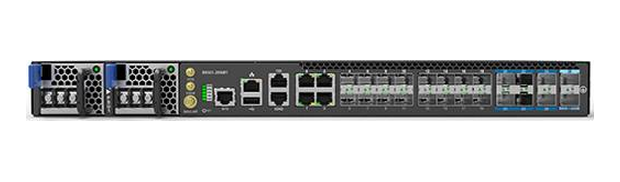
Cell-site
UfiSpace S9501-28SMT
Qumran UX · 120 Gbps
8 × 10G, 16 × 1G, 4 × 1G RJ45
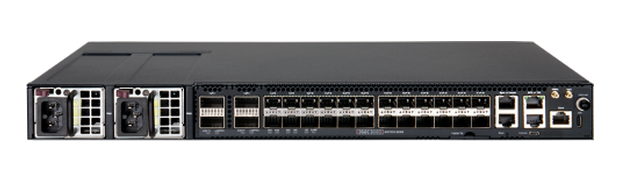
Agrégation
Edgecore AS7535-28XB
Qumran 2A · 800 Gbps
24 × 25G, 2 × 100G, 2 × 400G
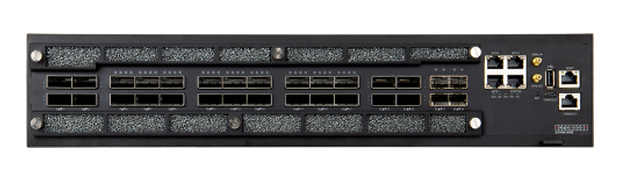
Métropolitain et bordure opérateur
Edgecore AS7946-30XB
Qumran 2C · 2.4 Tbps
4 × 25G, 22 × 100G, 4 × 400G
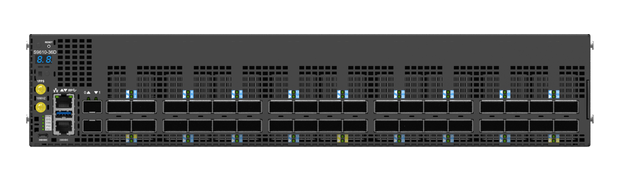
Cœur et peering
UfiSpace S9610-36D
Jericho 2C+ · 14.4 Tbps
36 × 400G, 18 compatibles ZR+
Retrouvez tous les routeurs qualifiés dans la liste de compatibilité matérielle OcNOS.
Une famille OcNOS-SP, en quatre éditions
Chaque routeur exécute l'édition OcNOS-SP adaptée à son rôle et à sa capacité. Pour un OcNOS System, un seul contrat de support couvre le logiciel et le matériel.
CSR
Routage de site cellulaire et backhaul sans fil fixe ou micro-ondes : couche 2 et couche 3, IP/MPLS, protection en anneau et linéaire, OAM et synchronisation.
IPBASE
Commutation de couche 2, routage de couche 3 avec OSPF, IS-IS et BGP, VXLAN-EVPN, OAM IETF et NETCONF.
MPLS
Ajoute MPLS, SR-MPLS, EVPN sur MPLS, protection en anneau et linéaire, Carrier Ethernet, OAM et OpenConfig.
PLUS
Ajoute SRv6, CE 3.0, 1588v2 et SyncE, pour les routeurs d'agrégation haute densité à partir de 300 Gbps.
Éditions selon la fiche technique OcNOS-SP. La prise en charge varie selon le routeur : consultez la Feature Matrix OcNOS.
Découvrez comment les agents IA lisent, modifient et restaurent les routeurs et switches OcNOS.
Questions sur les routeurs pour opérateurs de services.
Fiche technique et notes de solution.
La fiche technique OcNOS-SP et trois notes techniques à partager avec votre équipe. Un formulaire rapide, et le PDF se télécharge immédiatement.
Datasheet OcNOS-SP
L'aperçu complet d'OcNOS-SP : rôles, protocoles, synchronisation, éditions et routeurs pris en charge, dans un seul PDF.
Obtenir la fiche techniqueTransport WAN pour opérateurs
Des routeurs OcNOS-SP pour chaque couche du WAN, du site cellulaire au cœur, avec synchronisation et 400G OpenZR+.
Obtenir le briefMise à niveau SR-MPLS avec OcNOS
Migrez un réseau MPLS vers SR-MPLS sur des routeurs OcNOS-SP, un routeur à la fois, avec TI-LFA dès le premier routeur converti.
Obtenir le briefIPoDWDM avec 400G OpenZR+
Réseau optique routé sur OcNOS-SP : une optique cohérente dans le port du routeur allume la longueur d'onde sur le système de ligne DWDM existant.
Obtenir le briefPlanifiez votre réseau d'opérateur de services.
Nous associons chaque couche de votre réseau à des routeurs qualifiés, à l'édition OcNOS-SP dont chacun a besoin et à une conception adaptée à vos services.
Datasheet OcNOS-SP
Formulaire court. votre PDF se télécharge immédiatement après l'envoi.
✓ Ouverture de votre PDF dans un nouvel onglet.
S'il ne s'est pas ouvert, utilisez le lien ci-dessous.
Mise à niveau SR-MPLS avec OcNOS
Formulaire court. votre PDF se télécharge immédiatement après l'envoi.
✓ Ouverture de votre PDF dans un nouvel onglet.
S'il ne s'est pas ouvert, utilisez le lien ci-dessous.
IPoDWDM avec 400G OpenZR+
Formulaire court. votre PDF se télécharge immédiatement après l'envoi.
✓ Ouverture de votre PDF dans un nouvel onglet.
S'il ne s'est pas ouvert, utilisez le lien ci-dessous.
Transport WAN pour opérateurs
Formulaire court. votre PDF se télécharge immédiatement après l'envoi.
✓ Ouverture de votre PDF dans un nouvel onglet.
S'il ne s'est pas ouvert, utilisez le lien ci-dessous.