
Cell site routers 5G abiertos con temporización de operador integrada.
IP Infusion ofrece el cell site router completo que los operadores móviles instalan en la torre: un cell site gateway desagregado (DCSG) con OcNOS-SP preinstalado en un equipo abierto validado y endurecido para temperatura. Termina el xHaul 4G y 5G en la torre y lo lleva al backhaul, y mantiene IEEE 1588v2 PTP y SyncE para que la fase y la frecuencia lleguen a cada radio y la celda siga en el aire.
Operadores móviles que ejecutan transporte abierto.
Los operadores móviles de Asia y África ejecutan hoy cell site routers abiertos en producción.
Un despliegue de 5G Cell Site Router a escala nacional
Asia Pacific Telecom seleccionó a IP Infusion para su despliegue de 5G Cell Site Router, ejecutando OcNOS en hardware white-box de UfiSpace integrado por FHnet y Foxconn, para acelerar la transformación de su red 5G.
"Al adoptar redes abiertas y desagregadas, podemos mejorar la flexibilidad y la eficiencia de nuestra infraestructura de red. Este enfoque no solo impulsa la innovación, sino que también nos permite servir mejor a nuestros clientes mejorando la entrega de servicios y ampliando el acceso a las soluciones digitales más recientes. Nuestro objetivo es garantizar que la conectividad que proporcionamos siga respondiendo a las necesidades cambiantes de las comunidades a las que servimos." Lloyd Mphahlele, director general de Group Technology en MTN Group
IP Infusion da soporte a más de 600 operadores en 60 países, respaldado por 26 años de ingeniería de protocolos.
Fronthaul, midhaul y backhaul en un router abierto.
El cell site router lleva fronthaul de paquetes de clase eCPRI, midhaul SR-MPLS y backhaul SR-MPLS, con temporización IEEE 1588v2 PTP y SyncE ejecutándose en cada nivel.
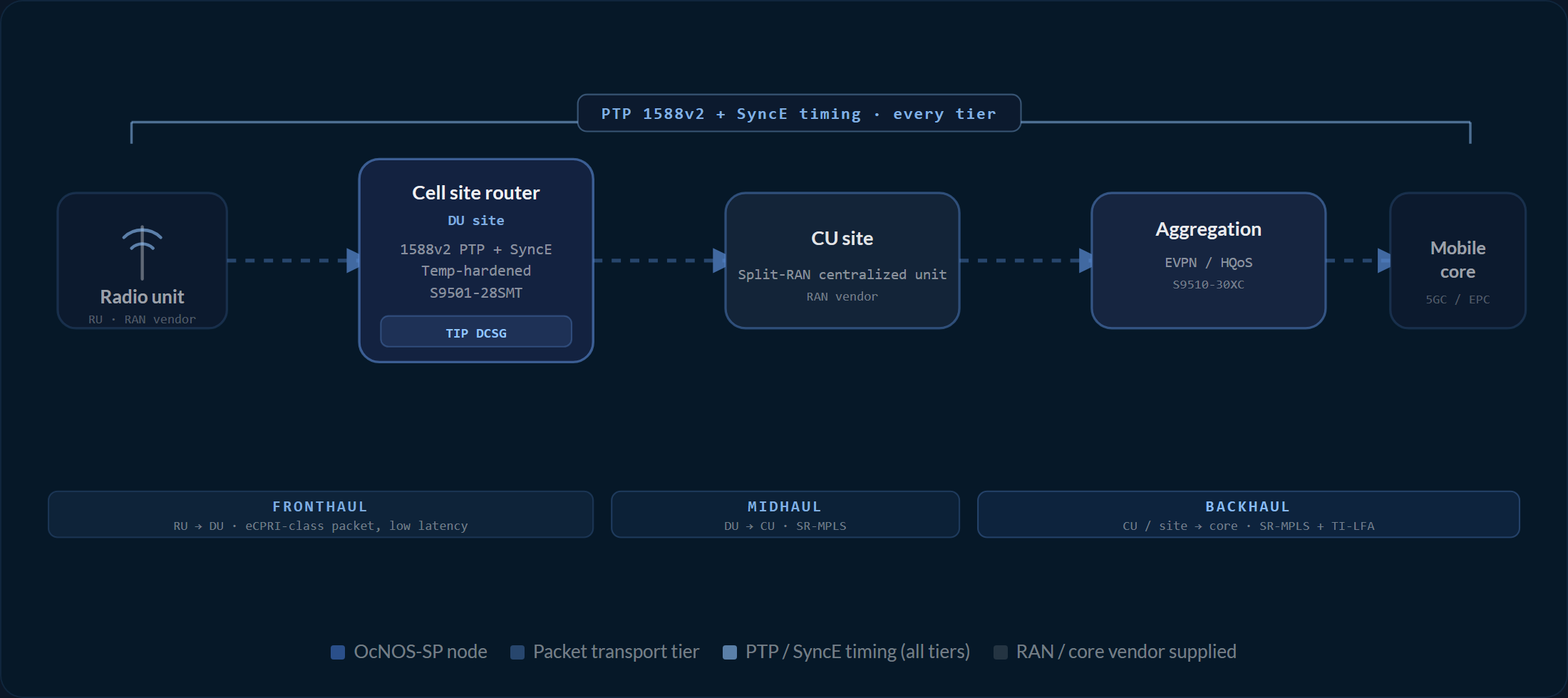
La misma imagen de router lleva cada nivel xHaul, licenciada y dimensionada por rol. El fronthaul se ejecuta como Ethernet de baja latencia, el midhaul y el backhaul se ejecutan sobre SR-MPLS, y la temporización PTP y SyncE abarca los tres.
Fronthaul de paquetes de baja latencia
El router lleva el fronthaul por paquetes de clase eCPRI entre la unidad de radio y la unidad distribuida como Ethernet de baja latencia con temporización precisa, no como un dominio SR-MPLS. La interfaz de radio eCPRI la suministra el proveedor RAN; el router transporta los paquetes.
Midhaul en un RAN dividido
En un RAN dividido, el router transporta Midhaul SR-MPLS entre la unidad distribuida y la unidad centralizada, para que la RAN pueda distribuir sus funciones entre sitios.
Backhaul hacia el core móvil
El router lleva Backhaul SR-MPLS desde el cell site hasta el núcleo móvil, con Flex-Algo y fast reroute TI-LFA. Los proveedores de RAN y de núcleo suministran el núcleo 5G.
Switch L3 con temporización
El router es el router y switch L3 cualificado en temporización que lleva PTP y SyncE en el mismo equipo. Esto es lo que los operadores entienden por un switch L3 con temporización en el cell site.
El rol DCSGQué perfil PTP para la ruta que tiene delante.
El cell site router se ejecuta como un reloj de límite PTP y un nodo SyncE en cada nivel xHaul. La única decisión que cambia de sitio a sitio es el perfil de telecomunicaciones PTP: G.8275.1 para temporización completa, donde cada salto es consciente de la temporización, o G.8275.2 para temporización parcial en una ruta existente (brownfield). Elija un perfil a continuación para ver el diseño.
Elija Temporización completa G.8275.1 , donde cada nodo de la ruta es un boundary clock compatible con PTP. Funciona sobre Ethernet con multicast y transporta fase, hora y frecuencia de extremo a extremo, que es el diseño para una ruta de transporte nueva y consciente de la temporización.
Recomendado: temporización completa G.8275.1 Elija Temporización completa G.8275.1 , donde cada nodo de la ruta es un boundary clock compatible con PTP. Funciona sobre Ethernet con multicast y transporta fase, hora y frecuencia de extremo a extremo, que es el diseño para una ruta de transporte nueva y consciente de la temporización. Recomendado: temporización parcial G.8275.2 Elija Temporización parcial G.8275.2 , en una ruta existente (brownfield) donde algunos saltos no son compatibles con la temporización. Funciona sobre IP con unicast y transporta fase y hora, con la frecuencia entregada por SyncE en la capa física, de modo que la temporización viaja por una ruta de transporte ya instalada.| Aspecto | Temporización completa G.8275.1 | Temporización parcial G.8275.2 |
|---|---|---|
| Proporciona | Fase, tiempo y frecuencia | Fase y tiempo, con frecuencia desde SyncE |
| Requisito de red | Cada nodo es un reloj de límite compatible con PTP | Algunos saltos no son compatibles con la temporización (brownfield) |
| Transporte | Ethernet, multicast | IP, unicast |
| Uso típico | Ruta greenfield, totalmente compatible con la temporización | Overlay sobre una ruta de transporte instalada |
Última verificación: jul 2026. La clase de reloj exacta, el holdover y la especificación de reloj G.8273.2 dependen de la plataforma, la versión y el diseño de red. Contáctenos para confirmar la asignación de clase para su despliegue. Profundice en el protocolo: PTP y SyncE explicados →
El cell site router como un solo sistema completo.
El cell site gateway desagregado es una caja que lleva enrutamiento y conmutación L3, temporización IEEE 1588v2 PTP y SyncE, acceso SR-MPLS, EVPN Carrier Ethernet y QoS jerárquica. IP Infusion lo entrega completo, y sigue el patrón que el Telecom Infra Project estandarizó como el stream TIP DCSG.
Acceso SR-MPLS y EVPN Carrier Ethernet
El router lleva el acceso SR-MPLS desde la torre y ofrece servicios Carrier Ethernet EVPN sobre él. El diseño de servicios Carrier Ethernet y el detalle de MEF 3.0 están en la página de Metro Ethernet; consulte también EVPN.
QoS jerárquica en el cell site
QoS jerárquico aplica shaping y planifica el tráfico por servicio y por tenant en la torre, de modo que el xHaul sensible a la temporización y el best-effort comparten el enlace ascendente bajo una política definida.
Router, switch y temporización en una caja
Una plataforma abierta lleva juntos PTP y SyncE, IP y MPLS con acceso SR-MPLS, EVPN Carrier Ethernet y HQoS, de modo que el sitio celular funciona en un solo equipo como el Switch L3 con temporización.
Una caja endurecida frente a la temperatura para el cell site.
El cell site se sitúa en un gabinete o en la base de una torre, por lo que el cell site router se ejecuta en una caja compacta endurecida frente a la temperatura con temporización nativa. La pre-agregación y la agregación, que viven en un sitio controlado, escalan en una caja de clase centro de datos.
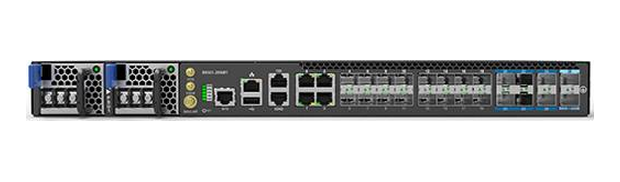
UfiSpace S9501-28SMT
Cell site router · endurecido frente a temperatura · Qumran UX (BCM88270)Una caja compacta endurecida frente a la temperatura, sobre silicio merchant Broadcom Qumran UX con aproximadamente 120 Gbps de capacidad de switching, diseñado para el rango ambiental de un armario o de la base de una torre. Admite de forma nativa IEEE 1588v2 PTP y SyncE como boundary clock u ordinary clock, con acceso SR-MPLS, Carrier Ethernet EVPN y QoS jerárquica. Jaulas SFP y SFP+, breakout según la plataforma, ópticas con interoperabilidad probada según el despliegue.
Otros cell site routers
Cell site router · más plataformasCada cell site router validado, con su ASIC y su versión de OcNOS, figura en la lista de compatibilidad de hardware.
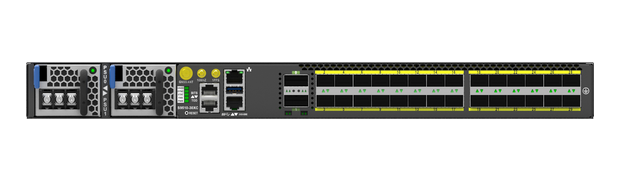
UfiSpace S9510-30XC
Preagregación y agregación · Qumran 2U (BCM88280)La caja de pre-agregación y agregación sobre silicio Broadcom Qumran con aproximadamente 360 Gbps de capacidad de switching, ubicado en un armario con entorno controlado en lugar de en la torre. Transporta temporización nativa junto con SR-MPLS y EVPN Carrier Ethernet aguas arriba desde los cell sites, con QoS jerárquica hacia el núcleo. Jaulas QSFP28 y SFP+, breakout según la plataforma, ópticas con interoperabilidad probada según el despliegue.
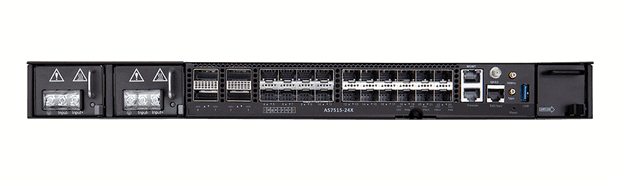
Edgecore AS7515-24X (CSR430)
Preagregación y agregación · Qumran 2U (BCM88284)El equipo de preagregación y agregación de Edgecore sobre silicio Broadcom Qumran 2U con aproximadamente 360 Gbps de capacidad de switching, ubicado en un armario con entorno controlado en lugar de en la torre. Transporta temporización nativa junto con SR-MPLS y EVPN Carrier Ethernet aguas arriba desde los cell sites, con QoS jerárquica hacia el núcleo. Jaulas QSFP28 y SFP+, breakout según la plataforma, ópticas con interoperabilidad probada según el despliegue.
Cada plataforma, ASIC y versión validada está en el Hardware Compatibility List → Los enlaces ascendentes de acceso inalámbrico fijo se enrutan hacia acceso de banda ancha.
Ponga en marcha y opere miles de sitios desde el primer día.
Una renovación de cell site se repite en miles de sitios, por lo que el hardware abierto de más de un proveedor validado se convierte en apalancamiento de compra, y Zero Touch Provisioning pone en marcha cada caja nueva con una línea base de Día 0 validada.
Onboarding Zero Touch Provisioning
Aprovisionamiento Zero Touch pone en servicio cada nuevo cell site router con una configuración base Day 0 validada sobre IPv4 o IPv6, de modo que un técnico instala el equipo en el rack y este se incorpora solo a la flota.
Automatización y telemetría abiertas
El router habla NETCONF y YANG, OpenConfig y gNMI en dial-in y dial-out con telemetría en streaming, de modo que la flota se integra con su propia pila de automatización y observabilidad. NETCONF y YANG →
IP Maestro para operar la flota
IP Maestro monitoriza, configura y diagnostica la flota desde un único servidor, con NETCONF hacia el sur y REST hacia el norte, de modo que los operadores gestionan miles de sitios desde una única interfaz de gestión. IP Maestro →
OcNOS Systems: un único contrato de soporte
Con OcNOS Systems, el software, el hardware validado y las ópticas se entregan juntos de un solo proveedor, de modo que la flota tiene una orden de compra, una ruta de escalamiento y un RMA, y un solo equipo se responsabiliza de la solución. Soporte →
Convierta la flota sitio a sitio.
Los cell site routers abiertos interoperan con la red Cisco, Juniper y Nokia instalada, por lo que usted convierte la flota un sitio cada vez. Cada sitio migra en su propio calendario una vez validada su coincidencia de capacidades.
Ejecutar un sitio abierto junto a la red instalada
Ponga en marcha un cell site router abierto para que OcNOS-SP se ejecute junto al Cisco, Juniper y Nokia (equipos instalados), formando adyacencias IS-IS, OSPF y BGP estándar, de modo que el sitio se incorpora al transporte sin rediseño.
Convertir un clúster de sitios por coincidencia de capacidades
Confirme la coincidencia de capacidades, Backhaul SR-MPLS, temporización PTP y SyncE, y Carrier Ethernet, y después migre un grupo de sitios según el calendario propio del operador, validando cada sitio antes de que transporte tráfico de producción.
Despliegue en toda la flota con ZTP
Zero Touch Provisioning pone en marcha cada nuevo sitio con una línea base de Día 0 validada, por lo que la renovación se repite en miles de sitios mientras la compra sigue siendo multi-proveedor. IP Infusion da soporte al router en cada paso.
El modelo comercial es abierto: hardware endurecido para temperatura de proveedores validados, con software y hardware en ciclos de renovación independientes.
Cell site router abierto frente a un chasis propietario.
La sincronización es el requisito más exigente del sitio celular, y el router abierto lo cumple: mantiene PTP y SyncE en todos los niveles de xHaul, transporta SR-MPLS y Carrier Ethernet, y permite renovar la flota a su propio ritmo con más de un proveedor.
| Capacidad | Cell site router abierto (OcNOS-SP) | Chasis propietario (Cisco / Juniper / Nokia) |
|---|---|---|
| IEEE 1588v2 PTP G.8275.1/.2 y SyncE | ✓ detalles → | ✓ |
| SR-MPLS con Flex-Algo y TI-LFA | ✓ detalles → | ✓ |
| EVPN MEF 3.0 Carrier Ethernet | ✓ detalles → | ✓ |
| Factor de forma de cell-site endurecido frente a la temperatura | ✓ | ✓ |
| Ciclos de renovación de hardware y software independientes | ✓ renovación de cada uno a su propio ritmo | ✓ ritmo marcado por el proveedor |
| Abastecimiento de hardware multi-proveedor en toda la flota | ✓ abastecimiento de proveedores validados | ✓ chasis de un único proveedor |
| Un único contrato de soporte para software, hardware y ópticas con OcNOS Systems | ✓ una sola vía de escalado y RMA | ✓ integrado por el proveedor |
Cisco, NCS 540, Juniper, ACX, Nokia y 7250 IXR son marcas comerciales de sus respectivos propietarios. IP Infusion no está afiliada a estos proveedores ni los respalda; la comparación refleja las capacidades de OcNOS-SP verificables en la matriz de funciones.
Datasheet y solution briefs.
El datasheet de OcNOS-SP y dos solution briefs para compartir con su equipo. Formulario rápido, y el PDF se descarga de inmediato.
Datasheet de OcNOS-SP
La visión general completa de OcNOS-SP: roles, protocolos, temporización y el hardware validado, en un PDF.
Obtener el datasheetActualización SR-MPLS con OcNOS
Una ruta de migración desde SR-MPLS instalado hacia OcNOS en hardware abierto, el transporte bajo el backhaul xHaul.
Obtener el briefWAN de nube y proveedor de servicios
Transporte abierto para la WAN de nube y de proveedor de servicios, el backhaul que lleva el tráfico móvil al core.
Obtener el briefPreguntas sobre el cell site router y la temporización de operador.
Ponga un cell site router abierto en su propio hardware.
Vea cómo IP Infusion entrega el cell site router completo con temporización de operador y xHaul SR-MPLS, o contáctenos para mapear sus sitios a las plataformas validadas y el licenciamiento adecuados.
Datasheet de OcNOS-SP
Formulario breve. su PDF se descargará de inmediato tras el envío.
✓ Abriendo su PDF en una pestaña nueva.
Si no se abrió, use el enlace de abajo.
Actualización SR-MPLS con OcNOS
Formulario breve. su PDF se descargará de inmediato tras el envío.
✓ Abriendo su PDF en una pestaña nueva.
Si no se abrió, use el enlace de abajo.
WAN de nube y proveedor de servicios
Formulario breve. su PDF se descargará de inmediato tras el envío.
✓ Abriendo su PDF en una pestaña nueva.
Si no se abrió, use el enlace de abajo.
Relacionado del blog
Precisión de reloj de nanosegundos para redes 4G/5G: PTP y SyncE con OcNOS
Temporización de operador IEEE 1588 PTP y SyncE para xHaul 5G en el cell site
Lea la publicación →Routers de Sitio de Celda sin Ventilador para Backhaul 5G en Entornos Hostiles
Cell site routers endurecidos frente a la temperatura para acceso xHaul 5G en despliegues rudos
Lea la publicación →